Showing posts with label aston martin. Show all posts

Wednesday, 6 January 2016

Plain and simple and uncomplicated


Technology is supposed to make our lives easier, allowing us to do things more quickly and efficiently. But too often it seems to make things harder, leaving us with fifty-button remote controls, digital cameras with hundreds of mysterious features and book-length manuals, and cars with dashboard systems worthy of the space shuttle.

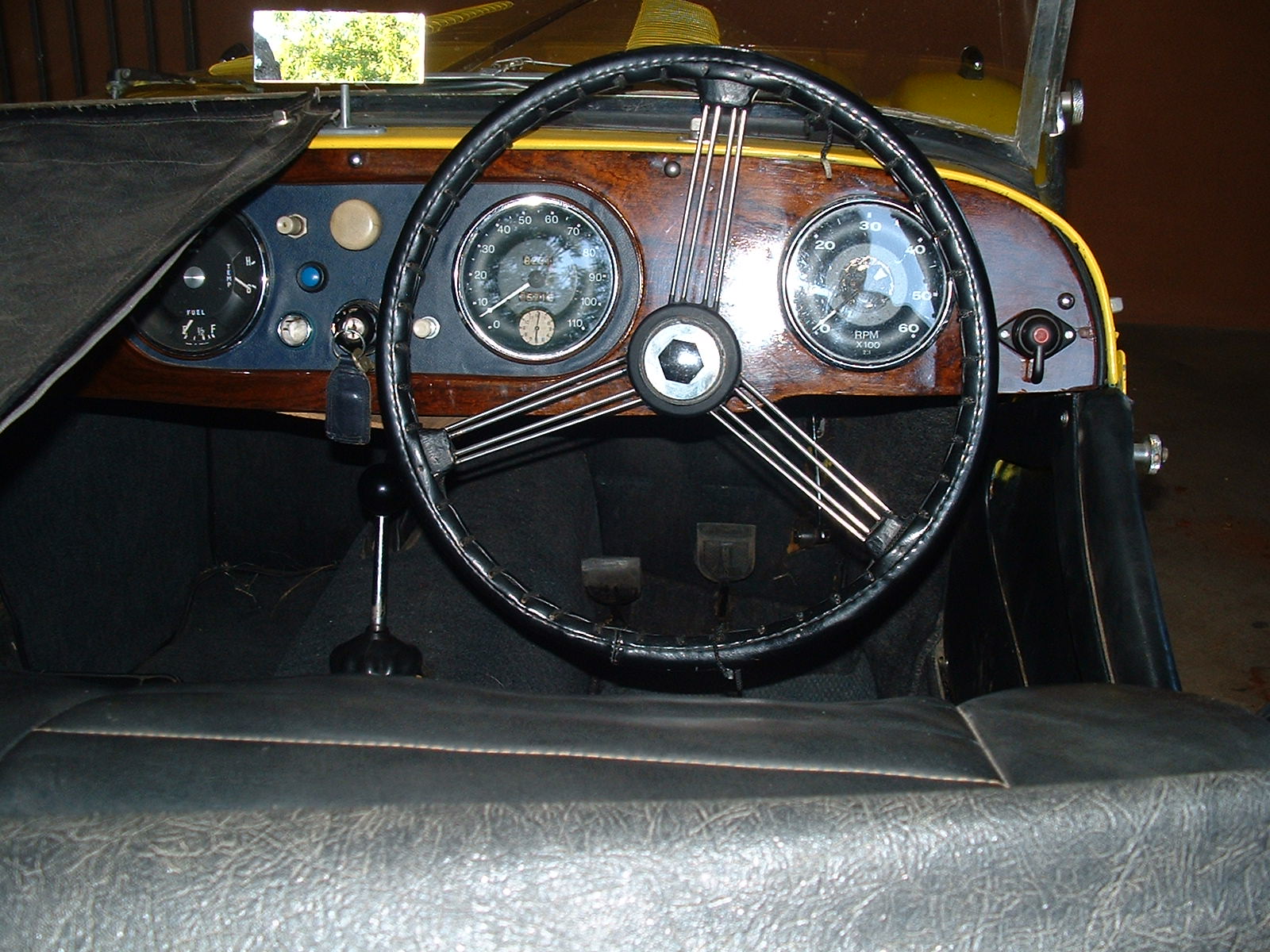
Give me the plain and simple and uncomplicated dashboard of a vintage car any time. No manual to read, just a couple of switches that need flicking and you’re on your way!

1953 Austin Healey BN1

1971 Aston Martin DBS V8 Manual

1959 Triumph TR3A

1966 Jaguar 3.8 MK.II

1964 Mustang 289 V8 Manual

1955 Triumph TR2 - in progress

1968 Jaguar E-type 4.2 Series 1½ Manual

And those thin, sometimes big, steering wheels, some made of lovely wood, that you can really get a grip on! Man, that's the way to go! 

The elegant dashboard of a 1954 Morgan car is technological simplicity.

::
Read more

Wednesday, 29 April 2015

Adding A Collectible Car To Your Portfolio For Fun And Profit


Well-heeled enthusiasts are dropping some serious money on collectible cars these days, not only as investments but as rolling works of art that can be appreciated as few appreciable assets can – out on the open road.

Collectible cars have always been a great investment and there are a lot of people out there who love cars and feel more comfortable putting their money in auto-mobiles than leaving it stagnate in a bank account.

Although there’s no crystal ball that lets an investor determine the future value of a collectible car, here are a few helpful tips for those looking to add one or more vintage rides to their portfolios as well as a wish list of 10 up-and-coming classic models that can be expected to grow in value over the coming years.

- Choose a particular model more for its personal and emotional appeal than strictly as an avenue for profit. Choose what you like, something you’ll enjoy driving and owning, and if there’s a dividend down the road – congratulations.

- But a word of caution - some cars may have great visual appeal that may not translate into value or reliability. In other words, do your homework and use the Internet and other resources to determine which models are most-desired by other collectors and to help estimate current values.

- Inspect the car thoroughly for rust, accident damage or any other faults

- As is the prudent course of action when buying any used vehicle, buy vintage cars only from reputable sources and have an expert mechanic check out a model under consideration to ensure it’s in good shape. Make sure the technician you choose is well versed in the peculiarities of the particular genre of vehicle in which you’re interested. If you’re buying a British sports car, you need to find a mechanic that understands British cars.

- Choose the best model in the best condition within a given class you can afford.

- Keep an eye out for originality – the fewer numbers of a particular model built or the rarity of a particular option combination included, the greater its value.

Even when stored properly, a car deteriorate when it’s not driven – by ‘exercising’ the car it stays in shape,. One of the best things you can do for a collectible car is to drive it. There’s no other investment that allows that kind of enjoyment!

TOP 10 (Starting at No. 10)


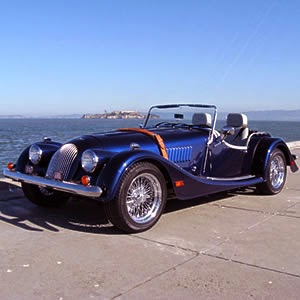
10. Morgan Plus 8. Built from 1968-2004
Take an unmistakably British roadster design, refrain from all but the most necessary updates to comply with regulations, build -- partially from wood -- in low numbers and, finally, become an icon. Now repeat. This was basically Morgan’s playbook for decades, and the team’s star forward was unquestionably the Plus 8. Built from 1968-2004 with few visual changes, this Moggie looked like ye olde sporting motorcar, but handled quite well and could keep up with many contemporary sports cars. Even today, there’s something quirky and fun about squeezing into one of these all-time British cars for a drive, especially the propane-fueled '84-'89 cars whose Buick-designed, Rover-sourced 3.5-liter V8 had fuel injection and a certain agility dulled by the bigger engines that soon followed.


9. Austin-Healey Sprite. 1958-1961
Donald Healey’s ultimate statement of affordable fun turns 50 this year, and even though the Austin-Healey Sprite’s demise came in 1969 (the less charismatic MG Midget cousin soldiered on another decade), it’s still one of the most popular all-time British cars for the street or, when modified, the track. Healey’s cost-saving approach depended on unabashed raiding of Austin and BMC parts bins, but the early Mk I Sprites of 1958-1961 featured an unmistakable front-end treatment: The Brits nicknamed these cars Frogeyes, whereas we nicknamed them Bugeyes. Regardless, these are the Sprites to own -- the ones wearing smiles, as big as their owners’.


8. Lotus Elise. First produced for Europe in 1996
Lotus founder Colin Chapman may have left us too soon, but his influence lives on with one of the all-time British cars worthy of being called a Lotus: the Elise. Chapman put Lotus on the map through obsessively cutting all unnecessary weight in his cars and tuning them for performance and handling. First produced for Europe in 1996, and finally appearing in the U.S. as a 2005 Series 2 model, some consider the Lotus Elise to be the car that saved the company’s bacon. Its success marked the long-overdue return of a genuine, reasonably affordable British sports car.


7. Landrover Series I, II and III. Between 1948 and 1985
Let’s make it perfectly clear: This is not about the squeaky-clean yuppie haulers that litter the suburbs. This is the British equivalent to America’s Jeep -- and to some Americans, the more desirable choice. Between 1948 and 1985, Series I, II and III Rovers were rugged and sparse, often matching the terrain they crossed. Like the Jeep, there was no pretense in the Rover’s presence, just incredible off-road ability. So as you might guess, this makes for a less than placid ride and handling on pavement. For the most agreeable compromise, shop for later Series IIIs from '82-'85 with their stronger half shafts and availability of limited creature comforts.


6. Aston Martin DB5. 1963
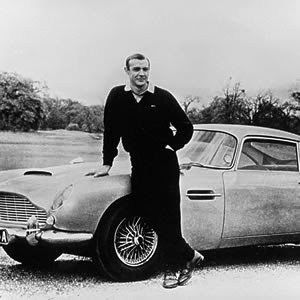
True, this is the model famous for its appearances as James Bond’s personal car, but even without all the 007 gadgets, an Aston Martin DB5 is quite a performer. Its 4.0-liter I-6 was smooth and powerful, offering up 282 horsepower and 8.1-second 0-60 mph acceleration on the way to a 143-mph top speed. This wasn’t half bad for 1963, and even now, a well-sorted DB5 doesn’t completely feel its age from behind the wheel. Production gave way to the DB6 in 1965, and the model’s celebrity association doesn’t make finding or affording one any easier. That’s not to say this all-time British car isn’t totally worth the effort.


5. Bentley Continental GT.
It was a tough call whether to recognize the impact of the 1920s 4.5-liter Blower Bentley or to celebrate the contemporary Continental GT coupe. In the end, the GT -- even if derided by some as a “German Bentley” due to the marque’s VW ownership -- takes the honor. Short of supercars at twice the price, there just aren’t many modern cars that make the statement of the Continental GT. Luxury and performance credentials are implied at a glance and immediately substantiated by the driving experience. Triple-digit speeds are attainable in a flash, but the whole affair is drama-free from inside the well-appointed cabin. Truly, that qualifies this all-time British car as a Bentley.


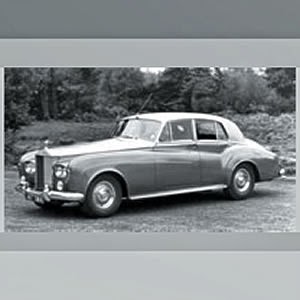
4. Rolls Royce Silver Cloud II. From 1959-1962
Today’s Phantom sedans and convertibles are impressive, but only time will tell whether their legends compare to the Silver Cloud’s. From 1959-1962, this car was the modern link to the marque’s earliest models that amazed buyers with durability, refinement and quiet, fuss-free operation. The Silver Cloud II featured understated improvements in cabin and exterior design elements that would live on in later cars for decades. Speaking of long-lived traits, the introduction of the Silver Cloud II also marked the debut of the 6.2-liter V8 and this all-time British car's “adequate” horsepower.


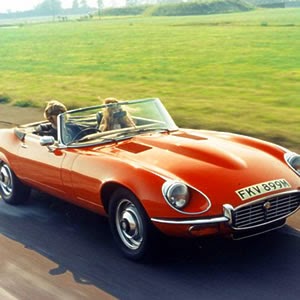
3. Jaguar E-type.
Earlier E-Type models from '61-'64 are seen as more desirable due to the covered headlamps and the entertaining 3.8-liter I-6 engine. For many enthusiasts, this is not a British car, this is the British car. Even Enzo Ferrari remarked that it was the most beautiful car ever made, upon its 1961 release. He wasn’t alone in this sentiment, as the immediately popular E-Type not only looked stylish enough to play with a Ferrari, it had the power to run with them. Jaguar press materials claimed 150 mph was possible, and if this was a little optimistic, it wasn’t off by much. Owners today probably aren’t as keen to explore their all-time British cars' upper limits, given the strong market and consistent demand. Earlier E-Type models from '61-'64 are seen as more desirable due to the covered headlamps and the entertaining 3.8-liter I-6 engine.


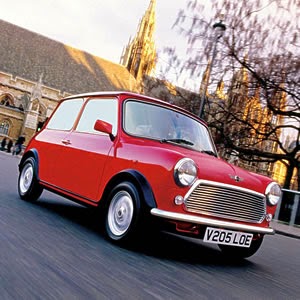
2. Austin Mini. 1959 to 1967
New MINI Coopers are typically dwarfed by just about anything on four wheels -- except maybe for the legend it’s based upon. And while the new car at least deserves an honorable mention in a review of all-time British cars, the original 1959 car made it all possible, even if it was somewhat by accident. Sir Alec Issigonis was only acting on orders to design a fuel-efficient car, not trying to create a legend -- but it turned out that both happened in the process. Thrift-minded consumers and celebrities alike celebrated the Mini, and it also made a name for itself in the racing world. Sales in the U.S. never matched those overseas, and tightening federal regulations didn’t help; so finding a decent '60-'67 model wasn't exactly easy.


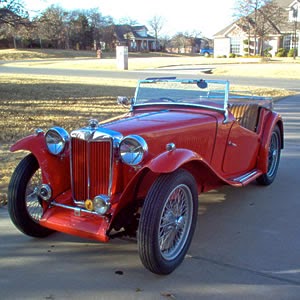
1. MG TC. 1945-1950 
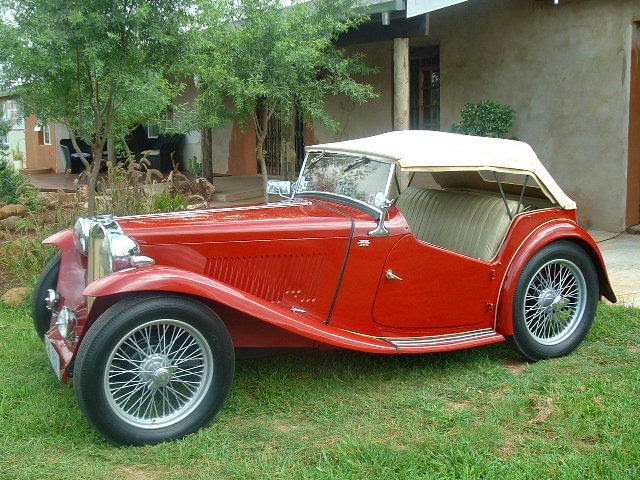
You have to wonder what the state of sports cars would be today without the 1945-1950 MG TC. On its own, frankly, it was nothing spectacular. However, MGs were nothing like the typical cars across the pond, so they became a hit with American GIs abroad. Some brought the little TCs home after World War II, while others quickly bought them as dealers sprang up. Regardless, the acceptance of the unconventional car within such a car-centric culture is likely to be a major factor in what followed here and around the world.

.

Read more

Wednesday, 18 June 2014

ASTON MARTIN DB4 - 1958-70 (£75,000-1million)

DB4 Drophead or Saloon (Volante)

You had the dinky toy - has the yearning ever gone away? These cars just look better and better with age, but; you'll have to be quick, as prices are climbing to Ferrari 250 levels. You could say the DB4 GT has already got there - one recently sold for £1million.

Why so expensive? Aside from gorgeous looks and aluminium panels lovingly wrapped around a steel frame, there's a home-grown alloy-twin engine, giving DB's true British pedigree.

The DB4/DB4 GT IS THE BEST DRIVER, THE DB5 the best looking, the longer, taller DB6 the 'sensible choice despite being labeled the lardy one - in reality there's only 18kg in it. No power steering or air conditioning as standard in the earlier cars though.

DB5 - immortalised as 007's car, but an ejection seat wasn't standard!

SPECIFICATIONS
ENGINE : 3670-3995cc, six-cylinder dohc
POWER : 240-325bhp
PERFORMANCE : 0-60mph - 8.1sec
TOP SPEED : 141-148mph
FUEL CONSUMPTION : 15mpg

To good motoring!
Dave Clarkson

QUOTE OF THE DAY

PERSISTENCE
The majority of men meet with failure because of their lack of persistence in creating new plans to take the place of those which fail.
 - Napoleon Hill

.
Read more

Tuesday, 13 August 2013

The passion for classics

 1953 Austin Healey BN1

There are few, if any, pieces of hardware as emotive as the car. With the birth of car designers rather than pure engineers, the door was open for them to express their visions for the future. These cars are celebrated here as we look back at what fired the imaginations of yesterday's creative minds.

The story of classic and dream cars charts the progress of our own history and experience and these pages are a celebration of that progression and a recognition of the value and importance of these cars in our lives.

AsonMartin O.I. V8

But have you ever thought about owning a TRUE classic? Something that makes your heart race and pumps adrenalin through your body? There is nothing quite like the feeling of owning a one-of-a-kind, hand-built, prestigious, super-car. AND having the added advantage of investing your money in a Solid, ever growing-in-value item.

Like antiques, classic and vintage cars have escalated in value through the decades—like old wine (and women!) they only improve with age. Even a neglected old lady picked up in an old barn somewhere, will reward you with her golden patina during a loving restoration undertaking.

Jaguar XK

Proof of the popularity of these beauties is the number of Classic and Vintage Car Clubs that are in operation in South Africa and throughout the world. These clubs are promoting the on-going interest in these old classics and also offer technical and general knowledge sharing, great get-togethers and outings, not to mention all the ‘noggins’!

If you’ve ever been on a ‘vintage rally’, you will know all about the camaraderie, fun and great experiences that happen on these get-togethers - the helping hands extended when you break down (even if it means them losing their place in the race!), the memories shared over a beer/glass of wine at the picnic tables, great food and great friendships forged.

1954 MG TD

1953 Austin Healey BN1

Of course there’s the downside (but not many classic collectors even recognise this as a downside!) of owning an almost 50 year old piece of history, and that’s the constant ‘tinkering’ that takes place—oil leaks, electrical problems, carb settings (most of the modern cars don’t even have carburettors anymore), constant polishing and general pfaffing with all the little items that makes your ‘ol’ lady’ so special!

 from this ... 

and this... 

 and this... 

to this!-Austin Healey BJ8

::

Read more

Monday, 15 July 2013

1971 ASTON MARTIN DBS V8 - Part II

Among Britain's top car and plane makers, two enjoyed similar routes to producing the best in their respective fields.


As a follow-up on the article by Ron Wheeldon on the Aston Martin DBS V8 published in "Drive" in January 1991, the Aston, at that time owned by Trevor Carter, was subsequently sold to Alan Nash, who owned it for a number of years before being acquired by myself in 1995. I'm not a fan of automatic cars, especially not in a sports car, and after having taken the DBS (which is manual) for a test drive, I was hooked! As Ron said in his article in 'Drive', there certainly are not enough superlatives to describe this particular model, which was the only manual in the country at the time.

When Webber Wentzel Bowens Attorneys sponsored the appearance of Ron's Hawker Hunter T Mk 68 at the Swartkops Air Show on 22nd April 2000, Ron invited me for a head-to-head contest with the Mk 68 down the runway. The following article appeared in Issue no 3/2000 of "CARS IN ACTION'.
The Aston Martin DBS and Hawker Hunter 

"BULLDOG BEST" - Hawker Hunter F Mk 58 vs Aston Martin DBS V8 - "Wings & Wheels" - John Smith looks at the Hawker Hunter and Aston Martin DBS V8

Shortly after the Great War, two new names emerged which would become the pride of the British nation for the remainder of the century. The Liquidated Sopwith Aeroplane Company was reborn as Hawker, and the Singer Car agents Bamford and Martin started producing their own cars named Aston Martin.

The firm struggled financially and produced less than seven hundred 1,5 and 2 litre cars up until the outbreak of WW2. Hawker prospered when new developments in aircraft design forced the military to purchase new equipment, culminating in the immortal Hurricane.

In 1947, tractor and gear manufacturer, Sir David Brown bought out the Aston Martin Company injecting much needed capital. The following year, he acquired the Lagonda firm, and with it the rights to manufacture the new Bentley designed 2,6-liter six-cylinder engine. Thus the DB series of cars were born, which would win Le Mans and the world sports car championship in 1959. The next decade would see the Aston Martin DB5 as the transport of choice of the James Bond movie character and with the introduction of the new V8 powered DBS.

1947 also called for a new jet fighter to defend Britain against high flying jet bombers, but technology was advancing so fast that the specification was obsolete before an aircraft was designed o meet it. Thus a private venture by Hawker was hastily accepted, using existing know-how to bridge the gap between the obsolete jets of WW2 and the supersonic designs that had yet to be developed.

 During the Biplane era, the Hurricane had been developed in much the same way, and even put into production without a single order from the dithering authorities, a move which, in all probability, saved Britain from invasion when ready supplies of Hurricanes were available, compared with a trickle of Spitfires.
First flight of the Hunter prototype was on July 20, 1951, flown by test pilot legend, Neville Duke. Just in time for the Cold War and the potentially menacing fleets of Soviet bombers, the Hunter was rushed into service, despite fundame ntal problems like engine surge (with consequent compressor stall and engine flame-out) when firing the guns at high altitudes.
A special after-burning version of the Rolls Royce Avon engine enabled Neville Duke to fly the prototype to an absolute world record speed over a 3-km course of 1170 km/h in 1953.

As the Hurricane had been developed into a successful fighter-bomber, when the Spitfire could take over the role as air superiority interceptor, the Hunter, with its ferocious cannon armament, followed suit with the introduction of the supersonic Lightning. Later versions had uprated engines and hard points under the wings for extra fuel tanks or bombs. Export orders were received from over a dozen countries and aircraft were supplied to, amongst others, Switzerland and Rhodesia. Although the former were never to fire their guns in anger, the latter were to give excellent service during the bush war. So effective was the Hunter as a gun platform that, in response to some journalistic hyperbole, Rich Brand was able to score a bulls-eye on a dustbin with a five round burst from the 30mm cannon!

During the horsepower race of the Sixties, Aston's venerable six was being humbled by the average American family's station wagon, with its large capacity pushrod V8. For the aristocratic marque from Newport Pagnel, this would simply not do. So Tadek Marek, their Polish-born engine-man, was commissioned to design their riposte. No ordinary Yankee V8 this turned out to be; an all-alloy design with cast iron wet liners (much like an Alfa) with 4 over-head cams.

 In true Aston tradition, development was done at Le Mans in two Lola T70's, with production engines being beefed up in the areas which had shown weakness. The result was an over-engineered monster motor of 5.34 litres (327 to Chevy fans) with chain driven oil pump the size of an ostrich egg and a 12 litre sump!

Aston Martin, believing that comparisons are odious, refused to divulge such an academic trifle as the power output. The Motor Magazine estimated around 375 bhp in the flattering SAE measure, but for comparison today, it would be around 310 bhp DIN. Whatever, the fact remains that the car with Bosch mechanical fuel injection system and 5-speed manual ZF gearbox, is a real stormer.

Aston Martin DBS 

Despite its considerable mass, acceleration is still impressive for a thirty year old car: 0 - 100 km/h in just under 6 seconds and the Quarter-mile in low fourteens. All this with a top speed of at least 160 mph and a cabin trimmed to the standards of a Rolls Royce. Owner of the 55 000 mile feature car tells me that once he had sorted out the complexities of the injection system, the car has been totally reliable; the heads have never even been lifted.

Dave Clarkson is a tractor specialist and finds such matters undaunting; chassis no 10303 is one of the last of the David Brown cars produced before the company was sold and the cars detuned by the fitting of Carburettors.

Hawker Hunter F MK58 

Ron Wheeldon owns two Hunters: a single-seater F Mk 58 and a two-seater T Mk 68, both ex Swiss Air Force. The fighter was delivered in 1959 as part of a batch of 100 and later developed into a fighter-bomber wielding Maverick missiles. The two-seater was a re-manufactured RAF trainer, which became an Electronic Warfare version, delivered in 1974 and upgraded with new systems in the Eighties, to keep pace with the new technology on the battlefield. In November 1994, the Swiss Air Force disposed of its ageing Hunter fleet to make way for new F18's. Having been meticulously maintained for so many years, these exciting machines, with their superb handling and immense airframe strength, were snapped up by war bird collectors like Ron.


During an air show at Swartkops on 22nd April, Webber Wentzel Bowens Attorneys sponsored the appearance of Ron's T Mk 68 in a head-to-head contest with Dave's Aston in a drag race down the runway. Dave saw 55 mph in first and 85 in second as he scorched away in the lead initially, but by the half-mile mark, it was "game over" to the Hunter. At 260 km/h, it was time to get airborne and with the Aston running out of room to brake, the dice was essentially over in the time you have taken to read this paragraph.

If you choose to get your adrenaline rush by mechanical means, then a classic jet fighter must be the ultimate choice. If refinement, mixed with raw power, is your goal, then the Aston must be the answer; a Boss Mustang for the English country gent."

Specifications 

Hawker Hunter F Mk 58
Engine : Rolls Royce Avon 207 Axial flow turbojet, 10150 lb thrust Max speed 1149 Kmh or up to a trans-sonic Mach 1:2 in a dive 90 deg

Chassis : Aluminium Alloy stressed-skin monocoque capable of withstanding +7:8 and - 5:0 "G" limits.

Mass : 9800 kgs in "civilian" trim 1134o with weapons (max) 3800 lbs
Fuel Consumption : 2000 litres/hr

Aston Martin DBS V8 1971 V8
90 deg. 100 mm bore x 85 mm
Stroke 5340 cc 9.0 : 1
Compression power (see text)
Torque 400 ft.lb 5 spd ZF
Manual or 3 spd Chrysler Auto Diff ratio 3.54 : 1 (Man)
Platform chassis with integral steel super-Structure to support alloy body panels
Mass : 3800lbs
Fuel Consumption : 14 mpg

.
Read more

Monday, 8 July 2013

1971 ASTON MARTIN DBS V8 - Part 1

Extract from "Drive", January 1991 - written by Ron Wheeldon.

Ron Wheeldon tries a much-aligned Aston Martin model on an AMOC run... and comes away impressed.

DBS V8

"The problem with Aston Martin cars, or with writing about them anyway, is the speed with which they exhaust one's supply of superlatives. The result is that one ends up either being extremely picky of babbling on like a teenager with a "hot chick".

Not that there's anything feminine about Astons. These machines are impeccably bred but are well matched to their James Bond image. They fit the character's good manners and civilised veneer, but always with that hint of menace beneath.

Of all the David Brown era Aston models, the last, the DBS, has always been the least popular among classic car 'types' and almost any article one reads about the DBS V8 model (with fuel injection) is crushing in its criticism - the car is portrayed as impossibly thirsty with a level of temperamentality capable of driving the most phlegmatic of owners to distraction.

I was never wildly impressed with the appearance of the car either, the early four-headlight nose and spoiler-less tail conspiring to render it almost ordinary. As a member of the Aston Martin Owners' Club I had many opportunities to regurgitate this derogatory information and this browned off a certain Trevor Carter sufficiently to motivate him to lend me his DBS V8 for a club run, so I ended up the proud possessor of the machine for almost two weeks.

At first it seemed to confirm all the worst opinions of the various scribes, reluctant to start and exhibiting an almost total lack of torque at low rpm so that, pulling off in first gear, was a similar experience to coaxing normal cars off the line in second, not enough revs on the clock and you stall, then the car won't want to start again ... Nevertheless, these turned out to be matters of learning the correct technique, which came quite quickly, and I was amazed at how soon I revised my earlier uninformed opinions. If anyone tells you that the DBS V8 is a dog, ask him if he ever got used to one that had the Bosch fuel injection set up by someone who actually understands it, and chances are he'll belt up.

The DBS must rate with very fine champagne as a sensual pleasure.

The interior is clothed in fine leather, as one would expect, and the very wide cabin with the two large armchairs breathes quality, as with other Astons. The dash slopes toward your feet and is sell laid out with tach and speedo easily visible through the steering wheel flanking the oil pressure gauge and a quartet of warning lights. The instrumentation of these cars has been roundly criticised for coming out of a host of other manufacturers' parts boxes, and is not impressive, typically British with no frills and gadgets, but it does the job.

The motor is not intrusive and it runs smoothly so that squiring the machine around the city and motorways is very calm and relaxed, the ride being truly excellent, not quite up to the Rolls-Royce standards, but not too far adrift from them either.

Road and wind noise is kept to a very low level at all normal motorway speeds, just a distant roar from the tyres and a bass murmur from the engine.

The most enduring impression I have of it, though, is of a feeling of control; the car goes exactly where it is pointed, the power steering is just right in that it doesn't feel like power steering at all at speed, and the massive weight of the car is translated into stability that brings to mind expressions lie 'rock' and 'tracks'.

At 160 km/h, the feeling is of being at about 80, secure, relaxed, with easy conversation and the distinct impression that a cruise down to Cape Town at about 180 km/h would be a pleasant doddle (please, Mr. President, may I have an exemption from speed restrictions?).

The power is such that the Aston virtually ignores hills and a nudge on the right-hand pedal translates into an instant, eager rush, which seems to have no end, so overtaking is no problem at all. The brakes are well up to the task too, reassuringly powerful, bleeding off speed even more rapidly than the engine puts it on (the DBS was tested 170-0 in 6 sec).

A highway express then, not a sports car? The DBS tips the scales at almost 3600 lb and is no light-weight, but one finds that weight figures lose their significance on tight, twisty roads.

The AMOC breakfast run took us to Hunter's Rest near Rustenburg and I drove the DBS with a load of four adults on some roads that must have been designed with sports cars in mind - sports cars like the Ferrari Dino, Lotus Europa and, well yes, the Aston DBS.

While in all truth the Aston probably couldn't stay with the former two in an all-out race on a twisty circuit, it is easily more than their match as a road car. It is astoundingly nimble and reacts well to being driven with flair.

Originally a mere adaptation of the DB 6 chassis, the set-up of the DBS is truly superb, and with the well-spaced ratios in the ZF 5-speed gearbox allied to the shattering power of the V8, the result is a remarkably rewarding driving machine. As a bonus, I found that the fuel consumption was also within reason - an average of 18 1/100 km.

I found that I liked it more and more and even the less-than-exciting lines have a plus factor. One doesn't feel like a poseur driving the car. Handsome rather than beautiful, it doesn't do the Ferrari 308 bit of screaming to all and sundry that it's an exotic car.

For those in the know, though, this is a very exotic car indeed, and the quiet exterior conceals engineering and an engine with few peers. The V8 originated in the early sixties, when Aston's engine designer Tadek Marek had finished the work on the six and it was clear that, for competitive racing, something bigger was necessary.

Work on the V8 started in 1963 and the quad-cam unit was running in mid-65, with initially disappointing results. Nevertheless development continued and, as fitted to the Lola-Aston-Martin T70 in 1967 in five litre form, it developed 421 bhp. Two cars raced at Le Mans, but engine failure caused both to retire.

The lessons learned, however, helped enormously with the development of the road-going engine. This was finally fixed in capacity at 5 340 cc, using a bore and stroke of 100 mm x 85 mm and could, in some states of tune, develop 400 bhp. As fitted to the DBS, it seems, although the company at that stage did not divulge power figures, the engine was developing about 345 bhp. Whatever the exact figure, the power was clearly substantial - Motor found that the injected V8 was capable of 0-60 mph in 5.9 seconds, 100 mph in 13.8 and a genuine top speed of 160 mph. These were world-beating figures in 1969 when the car was launched, and remain very impressive today.

It is a little realised fact that the first DBS V8 was the fastest production Aston of all until the appearance of the Vantage model in 1977. Driving the car, one simply has the impression of endless, effortless "oomph" and that, in the final analysis, is what matters most.

So the DBS is an exclusive (only 405 were built between 1969 and the face-lift at the end of 1972), roomy, very high performance, hand built, prestigious, practical supercar, for my money worth all those superlatives.

If there's a better car, the Vantage V8 is probably it; you can bolt as much on to your BM or Merc as you like, they remain rubber stamp cars and just not in the Aston's class.

For those who would denigrate the Aston as out-dated and over-sized, I would refer to the fact that Road & Track magazine decided, in 1983, to find out which was the fastest exotic car of all of those then on sale. The mix included Porsche 930 turbo, Lamborghini Countach and Ferrari 512 BBi Boxer with the Aston included, but not really regarded as a contender.

The testing was done in Germany and the highest true speed obtained was 177 mph by the fastest car of the lot - the out-dated, over-weight, four seater Aston Martin!"

 1971 ASTON MARTIN DBS V8 
.
Read more

Wednesday, 26 June 2013

The Classic Era


These days we are hooked on nostalgia. As hopeless escapists, nothing feeds our need better than an old car - a CLASSIC car. After the Second World War, the motorcar came of age. As more and more people around the world took to the road, manufacturers began to stretch the boundaries. The makers set styling, engineering and safety trends in an increasingly competitive market: speeds increased; styling and engineering became more adventurous; and many devices we take for granted today, like disc brakes, four-wheel drive (4-WD) and automatic transmission, became widely used. The 1950's, 1960's and to an extent the 1970's were the most fertile period for the motorcar, a classic era and a perfect breeding ground for the classic car we cherish today, be it limousine or economy runabout, sports car or apparently humdrum saloon.
 
More than 80 000 Jaguar MK.II's were sold and the model inspired a whole raft of more expensive variations on the same theme : The S-Type, the 420 and even a Daimler with its own special V8 engine. It is the pure original MK.II, however, that has won the hearts of enthusiasts and collectors. The sight of a Jaguar MK.II inspires a misty-eyed emotional response like no other 60's saloon. For a decade from 1959, the year of Britain's first motorway, the compact Jaguar was the bread and butter of Browns Lane, Coventry. It was the last proper sports saloon the company ever made.

Classic Culture 
The first flickerings of interest in classic motor cars made after the Second World War began nearly three decades ago. Now, that interest has grown into an all-consuming passion for millions of men and women all over the world. Some use their classics daily, others just on high days. Some preen them like beauty queens in the concours d'élegance , parades of vehicles to the most elegant, best designed or best turned-out of which prizes are awarded. Many owners are driven by nostalgia, a need to own or recreate a piece of their past; others by simple love of old machinery.


As modern cars become ever more amorphous and as image-conscious individuals wear their classics like designer suits, as a statement, the classic is no longer the preserve of bearded, middle-aged men. To own an old car has become trendy. For some, the word classic has become debased down the years, seeming to embrace any number of awful machines. To them, classics, derided by many in their prime, are now dignified merely by rarity.

The Growth of an Industry
Today the motor industry is essential to the commercial prosperity of almost all the world's industrialized nations, with production dominated by a handful of massive multi-nationals. Hundreds of individual marques have fallen by the wayside sine the first motor cars were hand-built at the turn of the century and the post-war classic period of mergers and take-overs saw the eclipse of many once famous names. It was in 1908 that this process began, when Henry Ford pioneered mass-production, with his Model-T, while over in Europe, a few years later, cars like the Austin Seven and Bullnose Morris began to be produced in sufficient numbers to bring motoring within the reach of the middle classes. Since the late 1970's, robots have replaced some of the manual jobs on the production lines, but there will always be a place for hand-crafted super cars and luxury cars from companies such as Aston Martin and Rolls Royce.

 Mercedes W154 "Silver Arrow GP racer

MOTOR RACING in all forms has been a consuming passion of each successive generation of car enthusiasts since the first organised competition. The pioneers, by pitching car against car and driver against driver, learned not only about their own skills and how well their vehicles performed at the limit, but also about the durability of components. In those days, racing really did improve the breed. In the years after the Second World War, technological discoveries made in competition, including better tyres, oil and fuel, filtered down gradually o the ordinary family saloon.


 Here's to another good motoring season!

"Patience is the ability to idle your motor when you feel like stripping your gears." 
 - Barbara Johnson, best selling writer
.
Read more