Showing posts with label classic car. Show all posts

Saturday, 22 August 2015

1974 MGB GT


My latest acquisition - an Olde English White 1974 MGB GT with 3-door hatchback coupé body and Line-4 1799 cm3 / 109.8 cui, 62.5 kW / 85 PS / 84 hp (DIN) 5-speed manual powertrain.


1798cc 4 cylinder inline - 95 bhp @ 5400 rpm 
Gearbox : 4 speed manual with overdrive
Brakes : Disc front, drum rear 
Front suspension : Coil & Wishbone
Rear suspension v,
Steering : Rack and pinion

The MGB is a two-door sports car manufactured and marketed by the British Motor Corporation (BMC), later British Leyland, as a four-cylinder, soft-top roadster from 1962 until 1980. Variants include the MGB GT three-door 2+2 coupé (1965–74), the six-cylinder roadster and coupé MGC (1967–69), and the eight-cylinder 2+2 coupé, the MGB GT V8 (1973–76).

Replacing the MGA in 1962, production of the MGB and its variants continued until 1980, achieving sales for the MGB, MGC and MGB GT V8 combined of 523,836 cars. The MGB bodyshell was reprised in modified form with a limited run of 2,000 MG RV8 roadsters (1993–95).

.
Read more

Tuesday, 26 May 2015

Quick list : Top 10 Classic British Sports Cars Ever Made

Jaguar XKE (1961–1974) 
. 
Quick Info: 
Largest Engine: 5.3L V12 
Layout: Front Engine with Rear Wheel Drive 
Made in Coventry, England 
.
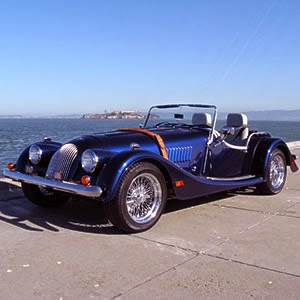
Morgan Plus 4 (1950-1961) 
Quick Info: 
Largest Engine: 2.1L Inline 4 
Layout: Front Mid Engine with Rear Wheel Drive 
Made in Malvern, Worcestershire, England 
.
Austin Healey Sprite (1958-1971) 
 . 
Quick Info: 
Largest Engine: 1.3L Inline 4 
Layout: Front Engine with Rear Wheel Drive 
Made in Abingdon, England 
.
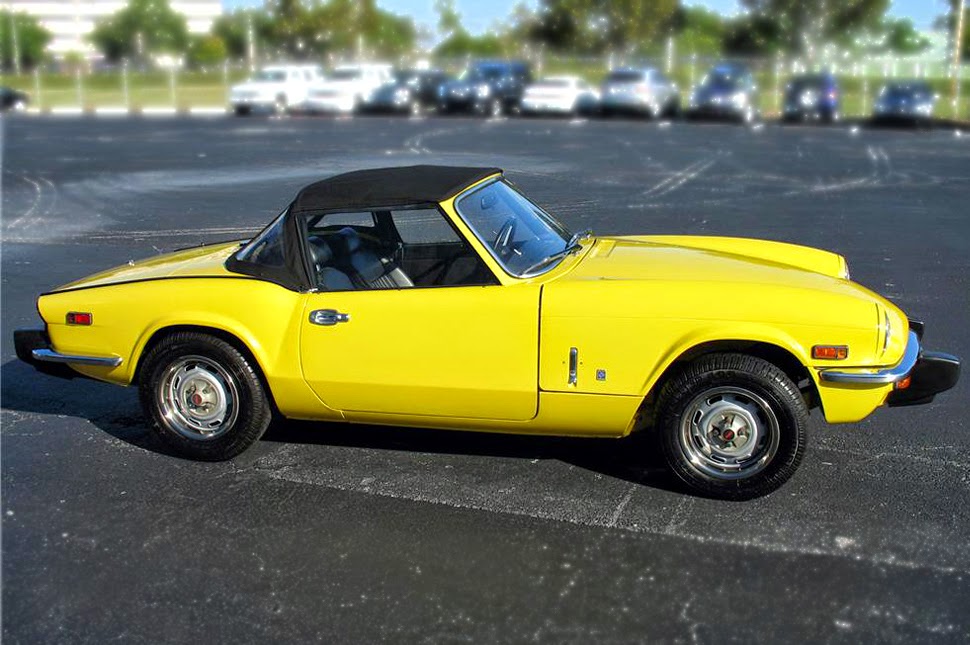
Triumph Spitfire (1962-1980) 
Quick Info: 
Largest Engine: 1.3L Inline 4 
Layout: Front Engine with Rear Drive 
Made in Canley, Coventry, England 
.
MGA Roadster (1955-1962) 
Quick Info: 
Largest Engine: 1.6L Inline 4 
Layout: Front Engine with Rear Drive 
Made in Abingdon, England 
.
AC Ace (1953-1963) 
Quick Info: 
Largest Engine: 2.6L Inline 6 
Layout: Front Engine with Rear Drive 
Made in West Norwood, London, England 
.
Austin Healey 3000 (1959-1967) 
Quick Info: 
Largest Engine: 2.9L Inline 6 
Layout: Front Engine with Rear Drive 
Made in Abingdon, England 
.
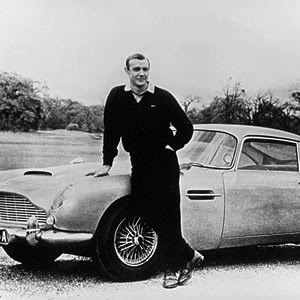
Aston Martin DB5 (1963-1965) 
Quick Info: 
Largest Engine: 4.0L Inline 6 
Layout: Front Engine with Rear Drive 
Made in England 
.
Bentley 4 1/2 Litre “Bentley Blower” (1927-1931) 
Quick Info: 
Largest Engine: 4.4L Supercharged Inline 4 
Layout: Front Engine with Rear Drive 
Made in Cricklewood, England 
.
Lotus Elite (1958-1963) 
.
Quick Info: 
Largest Engine: 1.2L Inline 4 
Layout: Front Engine with Rear Drive 
Made in Filton, England 
.
Info from "Zero to 60"

.

Read more

Wednesday, 29 April 2015

Adding A Collectible Car To Your Portfolio For Fun And Profit


Well-heeled enthusiasts are dropping some serious money on collectible cars these days, not only as investments but as rolling works of art that can be appreciated as few appreciable assets can – out on the open road.

Collectible cars have always been a great investment and there are a lot of people out there who love cars and feel more comfortable putting their money in auto-mobiles than leaving it stagnate in a bank account.

Although there’s no crystal ball that lets an investor determine the future value of a collectible car, here are a few helpful tips for those looking to add one or more vintage rides to their portfolios as well as a wish list of 10 up-and-coming classic models that can be expected to grow in value over the coming years.

- Choose a particular model more for its personal and emotional appeal than strictly as an avenue for profit. Choose what you like, something you’ll enjoy driving and owning, and if there’s a dividend down the road – congratulations.

- But a word of caution - some cars may have great visual appeal that may not translate into value or reliability. In other words, do your homework and use the Internet and other resources to determine which models are most-desired by other collectors and to help estimate current values.

- Inspect the car thoroughly for rust, accident damage or any other faults

- As is the prudent course of action when buying any used vehicle, buy vintage cars only from reputable sources and have an expert mechanic check out a model under consideration to ensure it’s in good shape. Make sure the technician you choose is well versed in the peculiarities of the particular genre of vehicle in which you’re interested. If you’re buying a British sports car, you need to find a mechanic that understands British cars.

- Choose the best model in the best condition within a given class you can afford.

- Keep an eye out for originality – the fewer numbers of a particular model built or the rarity of a particular option combination included, the greater its value.

Even when stored properly, a car deteriorate when it’s not driven – by ‘exercising’ the car it stays in shape,. One of the best things you can do for a collectible car is to drive it. There’s no other investment that allows that kind of enjoyment!

TOP 10 (Starting at No. 10)


10. Morgan Plus 8. Built from 1968-2004
Take an unmistakably British roadster design, refrain from all but the most necessary updates to comply with regulations, build -- partially from wood -- in low numbers and, finally, become an icon. Now repeat. This was basically Morgan’s playbook for decades, and the team’s star forward was unquestionably the Plus 8. Built from 1968-2004 with few visual changes, this Moggie looked like ye olde sporting motorcar, but handled quite well and could keep up with many contemporary sports cars. Even today, there’s something quirky and fun about squeezing into one of these all-time British cars for a drive, especially the propane-fueled '84-'89 cars whose Buick-designed, Rover-sourced 3.5-liter V8 had fuel injection and a certain agility dulled by the bigger engines that soon followed.


9. Austin-Healey Sprite. 1958-1961
Donald Healey’s ultimate statement of affordable fun turns 50 this year, and even though the Austin-Healey Sprite’s demise came in 1969 (the less charismatic MG Midget cousin soldiered on another decade), it’s still one of the most popular all-time British cars for the street or, when modified, the track. Healey’s cost-saving approach depended on unabashed raiding of Austin and BMC parts bins, but the early Mk I Sprites of 1958-1961 featured an unmistakable front-end treatment: The Brits nicknamed these cars Frogeyes, whereas we nicknamed them Bugeyes. Regardless, these are the Sprites to own -- the ones wearing smiles, as big as their owners’.


8. Lotus Elise. First produced for Europe in 1996
Lotus founder Colin Chapman may have left us too soon, but his influence lives on with one of the all-time British cars worthy of being called a Lotus: the Elise. Chapman put Lotus on the map through obsessively cutting all unnecessary weight in his cars and tuning them for performance and handling. First produced for Europe in 1996, and finally appearing in the U.S. as a 2005 Series 2 model, some consider the Lotus Elise to be the car that saved the company’s bacon. Its success marked the long-overdue return of a genuine, reasonably affordable British sports car.


7. Landrover Series I, II and III. Between 1948 and 1985
Let’s make it perfectly clear: This is not about the squeaky-clean yuppie haulers that litter the suburbs. This is the British equivalent to America’s Jeep -- and to some Americans, the more desirable choice. Between 1948 and 1985, Series I, II and III Rovers were rugged and sparse, often matching the terrain they crossed. Like the Jeep, there was no pretense in the Rover’s presence, just incredible off-road ability. So as you might guess, this makes for a less than placid ride and handling on pavement. For the most agreeable compromise, shop for later Series IIIs from '82-'85 with their stronger half shafts and availability of limited creature comforts.


6. Aston Martin DB5. 1963
True, this is the model famous for its appearances as James Bond’s personal car, but even without all the 007 gadgets, an Aston Martin DB5 is quite a performer. Its 4.0-liter I-6 was smooth and powerful, offering up 282 horsepower and 8.1-second 0-60 mph acceleration on the way to a 143-mph top speed. This wasn’t half bad for 1963, and even now, a well-sorted DB5 doesn’t completely feel its age from behind the wheel. Production gave way to the DB6 in 1965, and the model’s celebrity association doesn’t make finding or affording one any easier. That’s not to say this all-time British car isn’t totally worth the effort.


5. Bentley Continental GT.
It was a tough call whether to recognize the impact of the 1920s 4.5-liter Blower Bentley or to celebrate the contemporary Continental GT coupe. In the end, the GT -- even if derided by some as a “German Bentley” due to the marque’s VW ownership -- takes the honor. Short of supercars at twice the price, there just aren’t many modern cars that make the statement of the Continental GT. Luxury and performance credentials are implied at a glance and immediately substantiated by the driving experience. Triple-digit speeds are attainable in a flash, but the whole affair is drama-free from inside the well-appointed cabin. Truly, that qualifies this all-time British car as a Bentley.


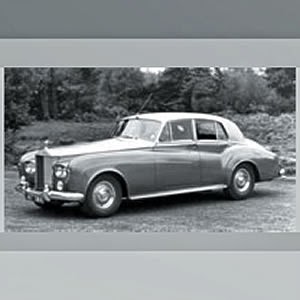
4. Rolls Royce Silver Cloud II. From 1959-1962
Today’s Phantom sedans and convertibles are impressive, but only time will tell whether their legends compare to the Silver Cloud’s. From 1959-1962, this car was the modern link to the marque’s earliest models that amazed buyers with durability, refinement and quiet, fuss-free operation. The Silver Cloud II featured understated improvements in cabin and exterior design elements that would live on in later cars for decades. Speaking of long-lived traits, the introduction of the Silver Cloud II also marked the debut of the 6.2-liter V8 and this all-time British car's “adequate” horsepower.


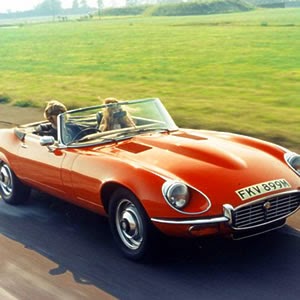
3. Jaguar E-type.
Earlier E-Type models from '61-'64 are seen as more desirable due to the covered headlamps and the entertaining 3.8-liter I-6 engine. For many enthusiasts, this is not a British car, this is the British car. Even Enzo Ferrari remarked that it was the most beautiful car ever made, upon its 1961 release. He wasn’t alone in this sentiment, as the immediately popular E-Type not only looked stylish enough to play with a Ferrari, it had the power to run with them. Jaguar press materials claimed 150 mph was possible, and if this was a little optimistic, it wasn’t off by much. Owners today probably aren’t as keen to explore their all-time British cars' upper limits, given the strong market and consistent demand. Earlier E-Type models from '61-'64 are seen as more desirable due to the covered headlamps and the entertaining 3.8-liter I-6 engine.


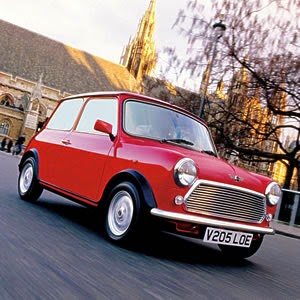
2. Austin Mini. 1959 to 1967
New MINI Coopers are typically dwarfed by just about anything on four wheels -- except maybe for the legend it’s based upon. And while the new car at least deserves an honorable mention in a review of all-time British cars, the original 1959 car made it all possible, even if it was somewhat by accident. Sir Alec Issigonis was only acting on orders to design a fuel-efficient car, not trying to create a legend -- but it turned out that both happened in the process. Thrift-minded consumers and celebrities alike celebrated the Mini, and it also made a name for itself in the racing world. Sales in the U.S. never matched those overseas, and tightening federal regulations didn’t help; so finding a decent '60-'67 model wasn't exactly easy.


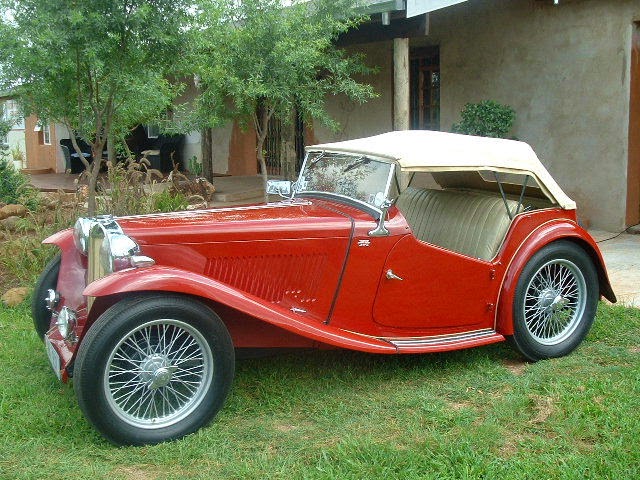
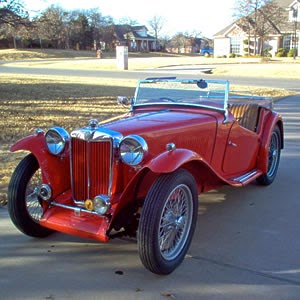
1. MG TC. 1945-1950 
You have to wonder what the state of sports cars would be today without the 1945-1950 MG TC. On its own, frankly, it was nothing spectacular. However, MGs were nothing like the typical cars across the pond, so they became a hit with American GIs abroad. Some brought the little TCs home after World War II, while others quickly bought them as dealers sprang up. Regardless, the acceptance of the unconventional car within such a car-centric culture is likely to be a major factor in what followed here and around the world.

.

Read more

Tuesday, 30 December 2014

Happy motoring in 2015!


If you are the proud owner of a well-loved, well-used classic car, I hope you used it a lot this past year and didn't just think of it as your best investment. You’ve got to use them. If you don’t, they just become objects d’art, half the appeal has gone and they get very unreliable. And people love to see them on the road; they've come up and asked me so many questions this past year, I could barely get out at times.

Think of our roads, if you like, as one long ribbon of showcases for moving objects of desire. My message to all those rich investors out there is simple: share the love of motoring!

Happy New Year!
Read more

Saturday, 27 December 2014

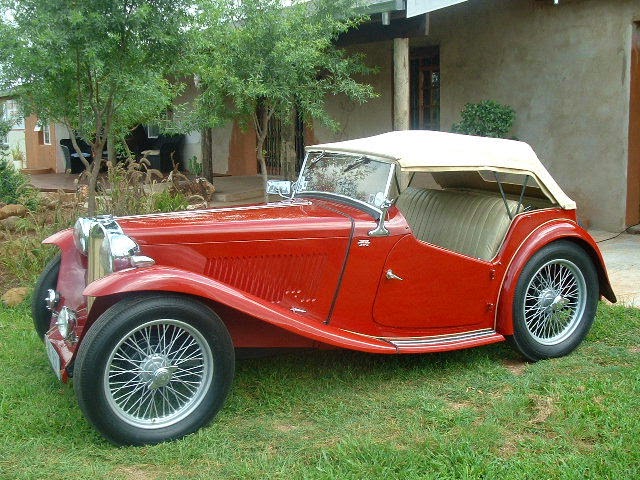
Car of the Month December 2014 is the MG TC/TD/TF

To get back into production quickly after the Second Word War, MG of Abingdon, Oxfordshire, had no option but to warm up its pre-war model, the TB. Thus the TC of 1945 had the same big 19in (48cm) wheels, fold-flat screen, crude semi-elliptic suspension and slab-tank body with ash framing. The body was wider now to give more elbow room for its passengers, while synchromesh on second, third and top gear made it more pleasant to drive. Hydraulic brakes were another welcome improvement.


1949 MG TC

Traditionalists loved it: it was nippy - 78mph (125kph) flat-out - and fun to drive. Nobody seemed to mind the heavy steering and rock-hard suspension. US servicemen stationed in the UK loved them so much they took them home and gave Americans a taste they never lost for European sports cars. Soon the C was spearheading an export drive to the USA - and that's where most of the 10,000-car production run ended up.

Charming as it was, the out-dated TC couldn't go on for ever, so fir 1949 MG introduced the TD: same chassis, same 1250cc four-cylinder engine, but with the new independent front suspension and the rack-and-pinion steering of the YA. Bumpers front and rear and smaller disc wheel didn't do much for the looks, but the TD was roomier and slightly faster, especially in higher compression MKII form from 1952. The TD was a big seller, racking up 29,664 units in its four-year production run.


1954 MG TD

The MG TD MK.II

The final flowering of the traditional MG was the TF of 1953. 

By moulding the headlamps into the front wings, which sloped the grill and fuel tank, Abingdon had gently modernised the shape. Inside, there were individual front seats and a re-styled dashboard. Early cars had the 1250cc engine, but from 1954, a 1500cc unit, giving 63bhp restored some of the performance.

The TF was a holding operation until the MGA appeared The TF looked what it was - warmed-up left-overs - and was really a holding operation while Abingdon prepared its first modern post-war model, the MGA of 1955. Ironically, the TF is the most sought-after of the three "square-rigger" post-war MG's.

MG TC/TD/TF - 1945 - 1955
ENGINE - In-line four
CAPACITY - 1250cc/1466cc
POWER - 54-63bhp
TRANSMISSION - 4-speed manual
TOP SPEED - 78-86mph (125-138kph)
NO. BUILT - 10,000 TC 29,644 TD 9,800 TF

The TD of 1949 was the first MG sports car to have the independent suspension system 

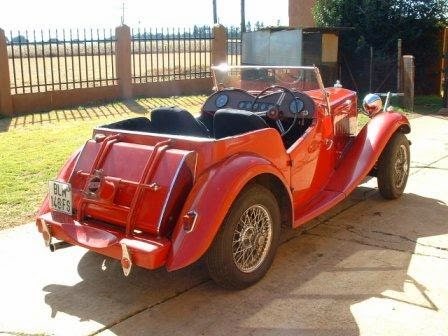
 1954 MG TD - rear

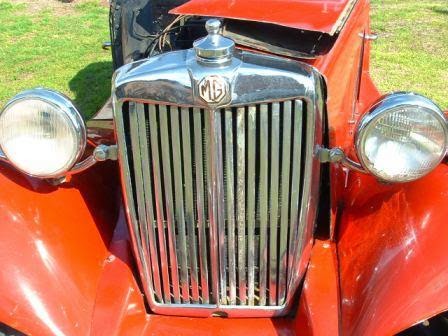
1954 MG TD - grill

1954 MG TD - rear

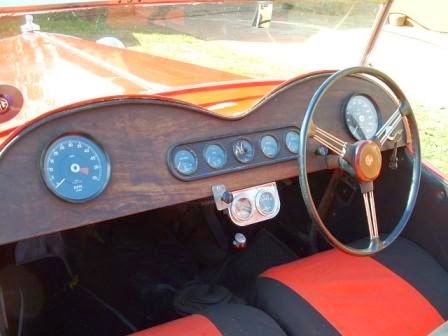
1954 MG TD - interior

1954 MG TD - interior

1954 MG TD - side view

::
Read more

Wednesday, 19 November 2014

Car of the month November 2014 - Rolls Royce


The Cloud had everything the traditional Rolls Royce buyer
could have wanted - except perhaps ultimate power in
Series I form. This is a rare H.J. Mulliner convertible.

The Rolls-Royce Siler Cloud and the virtually identical Bentley S-Type were revealed in 1955. Beautifully proportioned, exquisitely constructed and near-silent in operation, they were everything the traditional Rolls buyer could have hoped for.


This was Crewe's second "standard steel" car after the post-war Dawn and R-Type, with an off-the peg factory body rather than a made-to-measure, hand-crafted aluminium item in the pre-war tradition. Mulliner Park Ward, James Young and others all built exquisite special bodies on this chassis, and there was a long-wheelbase version of the standard body with an extra four inches (10cm) of rear leg room and a division.

Park Ward's famous Chinese Eye Continental, here in convertible form - the ultimate in open car luxury.

The traditional Rolls and Bentley radiator grilles were retained - these and a few badges and items on insignia were the only differences between the two otherwise identical cars. They rode on a substantial, and resolutely separate, traditional box-section chassis with independent front suspension and rear damper rates that could be altered from the driving seat to suit whatever type of road you were thinking of taking your Bentley or Rolls down.

The interior was nothing if not luxurious, with superbly crafted leather seats and a magnificent walnut dashboard.


The engine in the Cloud and S1 was basically the same 4.9-litre power unit carried over from the previous R-Type (and Silver Dawn). except that it had a new aluminium cylinder head and twin SU carburetors.

The Cloud as it appeared in 1955 with single headlights and a six-cylinder engine.
The V-eight Cloud II looked identical.

Transmission at the start offered a choice of either four-speed synchromeshed manual or four-speed Hydramatic automatic, manufactured under licence by Rolls from General Motors in the U.S.A. In fact, after just 18 months, the manual option was dropped and Rolls never encouraged owners to order it anyway. While the engine was incredibly refined, it wasn't really that powerful - the maximum speed was 106mph (170kph). It was Rolls-Royce's policy never to reveal specific power outputs, but the estimated 178bhp had 40cwt (2032kg) to pull along.

For lightness, the body of the Continental models was finished in aluminium;
the factory saloon came in steel only.

To own and drive a Rolls is a satisfying and ethereal experience as long as you don't want blistering performance and can afford the expensive maintenance. These days, it's cheaper to buy, but costly to restore.

The HJ Mulliner convertible, heavier, but just as beautiful as the Continental versions.

ROLLS-ROYCE SILVER CLOUD AND BENTLEY S-SERIES (1959 - 65)
ENGINE : Straight six and V-eight
CAPACITY : 4887/6230cc
  TRANSMISSION :4-speed manual / 4-speed auto
  TOP SPEED :106-116mph (170-186kph)
  NO. BUILT :
  Cloud 1/S1 - 3,107/2,231
  Cloud 2/S2 - 2,417/1,932
  Cloud 3/S3 - 2,044/1,318
  Plus 671 Clouds I, II, III

.

Read more

Sunday, 13 July 2014

Almost at the end of winter

The first rains are not far away and farming will soon be starting in all earnest. Tractors are being prepared for serious work and lands are being prepared and ploughed, ready for this season's crops. Those of you who are farmers, may this be a bumper year!

I'm sure all you car enthusiasts have been busy and resourceful in the detail and attention given to your beloved classics over the winter months, and are ready and raring for the coming summer months outings.

Many years ago, in the 1970's, I was at an Austin Healey show day at Patterson Park in Norwood and was impressed with a red Healey 3000 tri-carb on exhibit. My heart raced with excitement and I swore that one day I would own one of those, come what may!

1962 Austin Healey 3000 MKII

A couple of years ago I heard of one of these beauties for sale in Cape Town and without seeing it, bought it over the phone and had it sent up to Jo'burg on a roll-back. You can imagine my anticipation when it arrived a couple of days later - British Racing Green with black Leather and white piping interior - immaculate condition - an ABSOLUTE dream! 

72-spoke chrome wires, detailed engine bay and even a leather Tourneau! Magnificent! Had been a no-expense-spared rebuild back to standard in the U.K. and shipped to Cape Town by the previous owner.


As it came of the roll-back, I fired the motor and boy oh boy! talk about 3 SU growl - the sound is incomparable!

You can imagine that, in 1962, nobody could tune the 3 carbs, so Austin Healey went back to 2 carbs - the E-type proved the rest about 3 carbs.


In my mind, Austin Healey was one of the greatest sports cars ever produced.

Here is a test to find out whether your mission in life is complete.
If you're alive, it isn't.
- Richard Bach

Featured Short Story - (author unknown)

 
The inventor Arthur Davidson, of the Harley Davidson Motorcycle Corporation, died and went to heaven. At the gates, St. Peter told Arthur, "Since you've been such a good man and your motorcycles have changed the world, your reward is that you can hang out with anyone you want in Heaven."

Arthur thought about it for a minute and then said, "I want to hang out with God."

St. Peter took Arthur to the Throne Room, and introduced him to God. Arthur then asked God, "Hey, aren't you the inventor of woman? God said, "Ah, yes…"

"Well, " said Arthur, "professional to professional, you have some major design flaws in your invention :

1) There's too much inconsistency in the front-end protrusion.
2) It chatters constantly at high speeds.
3) Most of the rear ends are too soft and wobble too much.
4) The intake is placed way to close to the exhaust and
5) The maintenance costs are outrageous!"

"Hmmmm, you may have some good points there," replied, God, "hold on."God went to his Celestial super computer, typed in a few words and waited for the results. The computer printed out a small slip of paper and God read it.

"Well, it may be true that my invention is flawed," God said to Arthur, "but according to these numbers, more men are riding my invention than yours!"

The less said about that the better. (Extract from 'The World Encyclopedia of Cars')

Go well everybody and happy motoring!

Till next time, Dave

.
Read more