Showing posts with label jaguar. Show all posts

Wednesday, 6 January 2016

Plain and simple and uncomplicated


Technology is supposed to make our lives easier, allowing us to do things more quickly and efficiently. But too often it seems to make things harder, leaving us with fifty-button remote controls, digital cameras with hundreds of mysterious features and book-length manuals, and cars with dashboard systems worthy of the space shuttle.

Give me the plain and simple and uncomplicated dashboard of a vintage car any time. No manual to read, just a couple of switches that need flicking and you’re on your way!

1953 Austin Healey BN1

1971 Aston Martin DBS V8 Manual

1959 Triumph TR3A

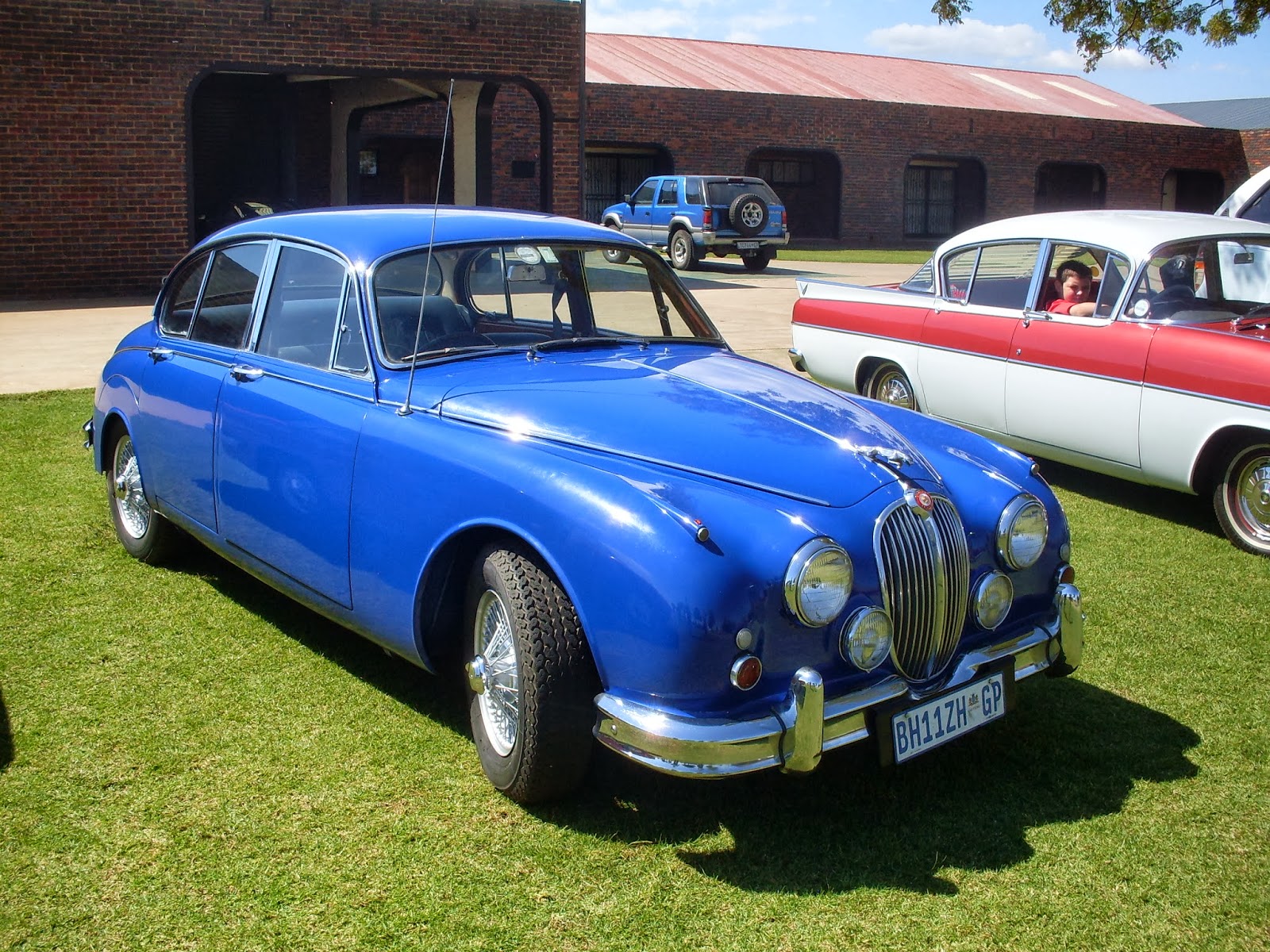
1966 Jaguar 3.8 MK.II

1964 Mustang 289 V8 Manual

1955 Triumph TR2 - in progress

1968 Jaguar E-type 4.2 Series 1½ Manual

And those thin, sometimes big, steering wheels, some made of lovely wood, that you can really get a grip on! Man, that's the way to go! 

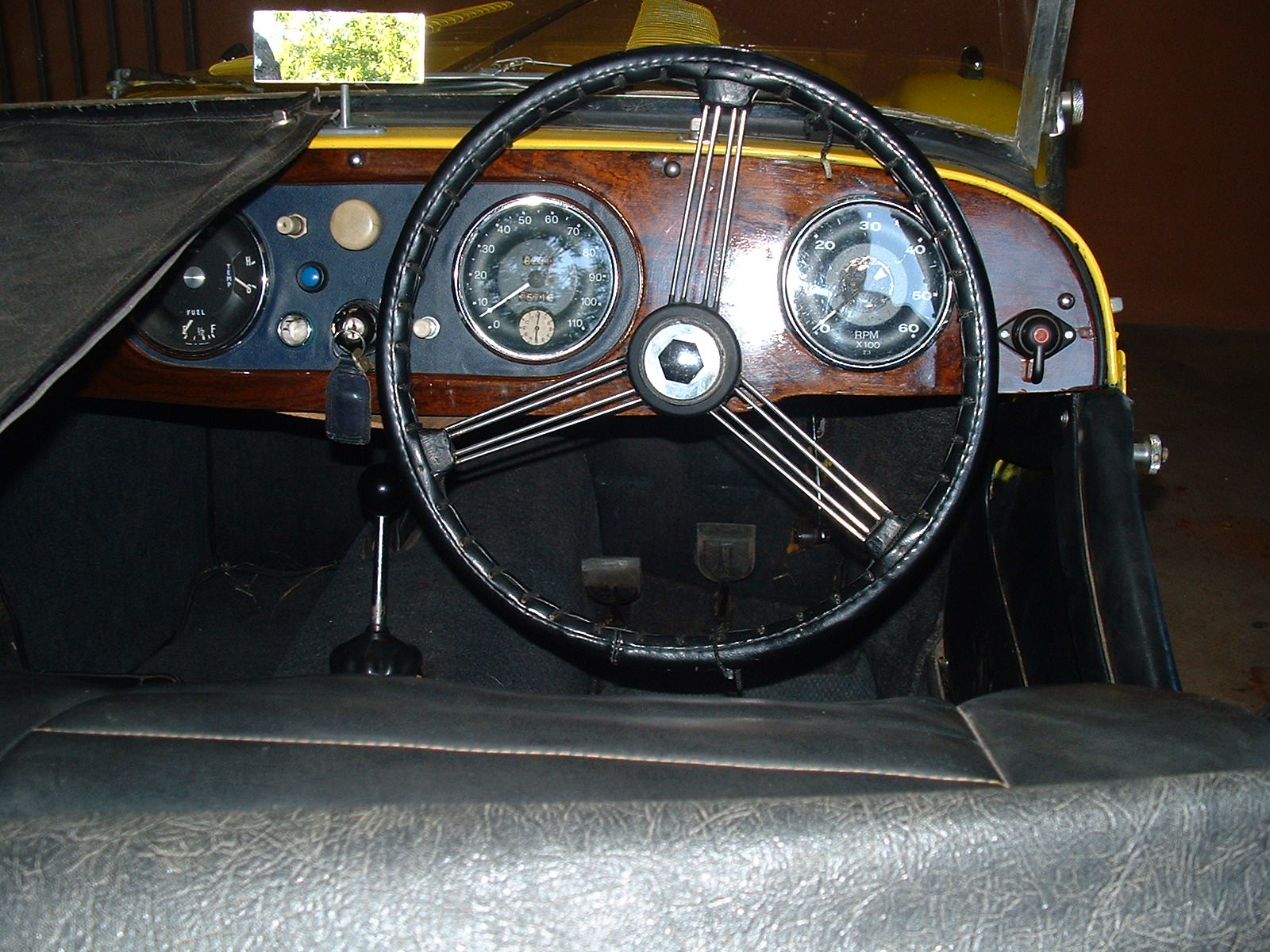
The elegant dashboard of a 1954 Morgan car is technological simplicity.

::
Read more

Wednesday, 16 October 2013

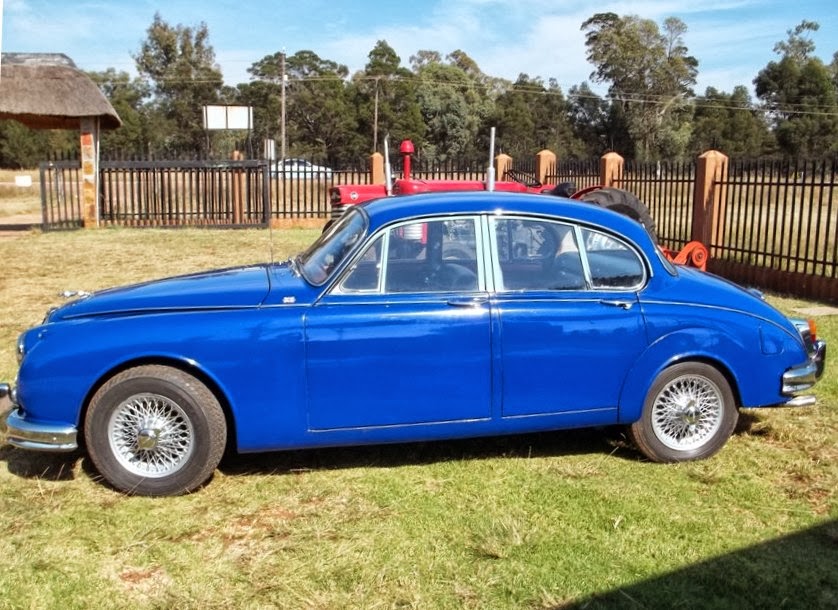
1966 Jaguar 3.8 MK.II


About two years ago I heard about a 1966 Jaguar 3.8 MK.II which was for sale in Tzaneen. I phoned the owner and after a short discussion I decided to go and have a look at it. I was astounded at the originality of the car and bought it on the spot. I put in a battery and fuel and even after standing for 20 years, it started immediately and ran like a watch. We drove it onto the truck and headed back to Tarlton.

BEFORE - 1966 Jaguar 3.8 MK.II 

Upon closer inspection at home, I found the original tool kit in the boot in it's original tray situated in the spare wheel well. In the glove box I found the original Jaguar wallet with it's hand-book, Wall Service Chart and the original factory warranty. The licence fees had been paid every year from 1966 by the previous owner. Incredibly, the car has done only 85,000 miles, never been in an accident and the cylinder-head has never been off.

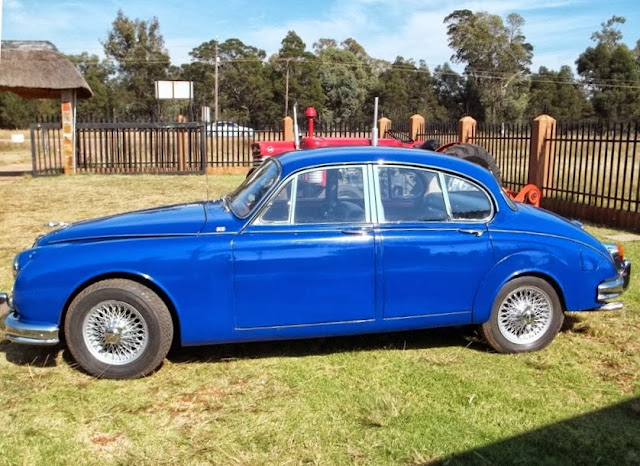
AFTER - 1966 Jaguar 3.8 MK.II

Over the next year or so, I re-sprayed the car Windsor Blue, an original Jaguar colour, cleaned up the upholstery and woodwork and fitted a new set of brake pads as well as new silencers.

The windscreen is original, but I renewed the rubbers when I sprayed the car and also put in new rubbers at the rear window. Mechanically the engine, gearbox, over-drive and suspension is original apart from new rubbers and grease boots. the car went through roadworthy the first time and turns heads whenever I drive it.

C'est la vie – happy motoring!
From the pen of the "Ja Broer" (Dave Clarkson)


More than 80 000 MK.II's were sold and the model inspired a whole raft of more expensive variations on the same theme : The S-Type, the 420 and even a Daimler with its own special V8 engine. It is the pure original MK.II, however, that has won the hearts of enthusiasts and collectors.


The sight of a Jaguar MK.II inspires a misty-eyed emotional response like no other 60's saloon. For a decade from 1959, the year of Britain's first motorway, the compact Jaguar was the bread and butter of Browns Lane, Coventry. It was the last proper sports saloon the company ever made.

The MK.II was nothing if not versatile. It was favoured not just by the criminal fraternity (it was no accident that the James Fox character drove a white MK.II in Donald Campbell's superb 1970 film Performance, or Michael Caine's pursuers a red one in the classic Get Carter of 1971) but also by the law itself, because it was so wickedly fast. At the same time, the MK.II was also a very respectable car; a quiet, comfortable and classy businessman's express for the stockbroker belt. It made a fine name for itself on the track as a saloon-car racer, and industry personalities such as Graham Hill and Colin Chapman gave the MK.II the stamp of approval by using them off-duty too.

Technically, the MK.II wasn't vintage Jaguar (though the unitary shell had broken new ground for the company on its 2.4 MK.I progenitor of 1955), but its beautifully-balanced shape had the classic William Lyons touch, as did the interior with its leather seats and wooden dash and door cappings - the fascia packed with dials and switches like a wartime bomber's flight deck.

The MK.II owner could do a legal 125mph (201kph) if he owned the full-house 3.8 manual overdrive car - it was the fastest saloon on the road for a time in the early 60's - or 120 (193) in the 3.4. The leisurely 2.4, on the other hand, couldn't even mange 100 (160) - which was why Jaguar's press department never allowed one out to be tested.


JAGUAR MK.II - 1959 - 1969
Engine - Straight Six
Capacity - 2483/3442/3781cc
Power - 120-220bhp
Transmission - 4-speed manual, 3-speed auto
Top speed - (3.8) 125mph (201kph)
No. built - 83 980

The 1966 MK.II was one of the last to have big bumpers: slim line bumpers were announced for the 240/340 models of 1967. Jaguar gave the MK.II a bigger rear window and different semi-open spats to help brake cooling.

Above : The 3.8-litre engine gave a claimed 220bhp, making the MK.II one of the fastest saloons on the road. 

"The Cat" 

At the Centenary Car Club, Tarlton, Gauteng, South Africa

At the Centenary Car Club, Tarlton, Gauteng, South Africa 


1966 Jaguar 3.8 MK.II - Car of the Month May 2012 - Centenary Car Club

::
Read more

Friday, 27 September 2013

Evolution of the Classic Car movement


As the 20th Century drew to a close, we seemed to look back as much as forward, pining for what were, as we see it, better times. We can't revisit our Golden Age, but at least we can own and experience the material objects that evoke it : clothes, music, films, furniture and cars - classic cars. Glamorous, kitsch, humble or high bred, these mobile time warps powerfully conjure up a particular period.

NEW VINTAGE
The hobby of preserving and collecting cars built after the Second World War began to take shape in the early 1970's. Veteran (pre-1905), Edwardian (pre-1919) and Vintage (pre-1931) cars - as defined by Britain's Vintage Sports Car Club - have always been easy enough to categorise, but, by the end of the 1960's, post-war motor cars of the better kind were coming of age. To call them simply "old cars" no longer seemed appropriate : whether beautiful, fast or technically re-eminent, the post-1945 car had at its best all the gravitas of the pre-war machinery. Slowly, quietly, the "new Vintage" had arrived, filling the gap between Vintage and modern for a new generation of enthusiasts.

ABOVE : Classics so evocative as these - the AC Ace, Ferrari 166 and C-Type Jaguar - have always been in strong demand and are priced at a premium. 

One-marque clubs for well-bred sporting marques such as Aston and Bentley had been around for years, but as enthusiasts for the less exalted makes felt the need to huddle together around a common banner, many new guilds and registers sprouted. Traditionalists had long complained that modern cars all looked the same:, but in the 70's there was a gut feeling that the motor car had seen its best years as safety and pollution regulations made inroads into designers' freedom. Styling, particularly in Britain, seemed to be losing its way.

No wonder older cars began to look increasingly attractive. They were plentiful, cheap, easy to work on and still very usable on increasingly busy roads. Drive an old car and you made a statement about your individualism: you weren't prepared to become just another faceless, sterile tin can on the bypass to oblivion or obsessed with keeping up with the Joneses in the yearly new-model scrum. It all came together in 1973, when a UK magazine, Classic Cars, was launched.


The new "classic" stuck, a useful catch-all term for a sprawling, ill-defined genre that, in just 20 years or so, has blossomed from an eccentric past-time into a multi-million-pound industry.

Not much happened for about ten years, until about 1982-83, when the nature of the hobby began to change dramatically. Slowly, under the noses of true enthusiasts, market forces took hold as it dawned on investors that really prime machinery could prove a fine hedge against inflation or an appreciating asset. Suddenly, the market hardened as Americans came to Europe seeking prime collectables.

At first, gilt-edged pre-war hardware - Bentley, Bugatti, etc. - set the pace in auction rooms, but by mid-decade, super cars of the 50's, 60's and 70's were hyped on their coat tails. Once-affordable Ferraris, Astons and Jaguar XK's and E-types became "investor" cars, commodities too expense and precious to be driven (which was rather missing the point).

As the auction houses pulled even bigger numbers, hype went into over-drive. Banks and finance companies offered loans to buy classics. The increasing ranks of classic car magazines bulged with advertising. Enthusiasts' gentle hobby was turned into an ugly, cut-throat brawl driven by greed. Many found themselves with cars that were worth more than their houses, machinery they were now too nervous to use. The boom couldn't last, fortunately. the recession hit in 1989 and demand quickly fell.

A HOBBY AGAIN
Today the market is stable again and most cars are where they could be - with enthusiasts and enthusiastic investors. Rare and high-calibre thoroughbred cars - especially those with a racing pedigree or an interesting history - will always be in strong demand. Fashion still has its part to play in the lower echelons of the market, but those who bought Citroëns and Jaguars have learnt about the dedication required to run an old car - some went back to their moderns, others caught a life-long bug!

.
Read more

Thursday, 19 September 2013

Spring news


Winter is at an end and, hopefully, mild blissful summer days lying ahead. Time to pull out the 'ol' lady' and give her a good debriefing for the outings ahead. I'm not saying that nobody ventured out during the winter, but summer always brings visions of lazy days in the country and more comfortable clothing (getting in and out of an E-Type or Healey with all the winter woolies can be quite an experience!).

During one such winter outing, the Jaguar Club met at Leopard's Lodge near Hartebeespoort Dam, and my E-type (among others) appeared in Volume 8 of 'Jaguar Magazine'. The day was glorious with Vultures soaring over-head, the cars being dwarfed by the majestic cliffs behind the Lodge. Here are some of the pics taken that day.

This picture of Dave Clarkson’s 1966 Jaguar E-type 4.2 Series I appeared in Volume 8 of ‘Jaguar Magazine' during a club visit to Leopard Lodge at Hartebeespoort Dam.

 Leopard Lodge

The view

Dining

Interior of the 1964 Jaguar E-type 4.2

JAGUAR E-TYPE INFO
The Jaguar E-type was an instant classic, an exercise in cool aerodynamic theory and unashamed showmanship, producing probably the most beautiful sports car of the 60s. It had the ability to live up to the looks, too. The 150mph (241kph) that Jaguar claimed for the E-type was devastatingly quick in 1961 (in reality only the tweaked-up press cars could achieve it, and 140 (225kph) was nearer the truth), making the new Jaguar Britain's fastest production car. Better still, it was probably Britain's greatest bargain price-wise, undercutting its nearest rival, the Aston Martin DB4, by a third.


That curvy shell, inspired by the Le Mans-winning D-Type racer, was immensely stiff - all the better to take advantage of its new wishbone and coil-spring independent rear suspension.

Combining near-limousine ride comfort with vice-like grip, even on the slender cross-ply tyres that looked like something off a bike to modern eyes, the new Jaguar handled superbly.

Providing the power was the 3.8-litre XK engine, already 13 years old but still well worthy of the new chassis.

JAGUAR E-TYPE (1961-75) 
Engine: Straight six/V-twelve
Capacity: 3781/4235/5343cc
Power: 265bhp
Transmission: 4-speed manual - 3-speed auto
Top Speed : Up to 150mph (241kph)
No. Built : All models - 72,507

THOUGHT FOR THE DAY - NEVER MESS WITH A WOMAN DRIVER!
A woman and a man are involved in a car accident; it's a bad one. Both of their cars are totally demolished, but amazingly, neither of them are hurt. After they crawl out of their cars, the woman says, "So you're a man. That's interesting. I'm a woman. Wow, just look at our cars! there's nothing left, but we're unhurt. this must be a sign from God that we should meet and be friends and live together in peace for the rest of our days."

Flattered, the man replies' "Oh yes, I agree with you completely, this must be a sign from God!"

The woman continues, "and look at this, here's another miracle. My car is completely demolished but this bottle of wine didn't break. Surely god wants us to drink this wine and celebrate our good fortune."

Then she hands the bottle to the man.

The man nods his head in agreement, opens it and drinks half the bottle and then hands it back to the woman. The woman takes the bottle and immediately puts the cap back on and hands it back to the man.

The man asks, "Aren't you having any?"

The woman replies,

"No, I think I'll just wait for the police..."


Go well everybody!

.
Read more

Tuesday, 13 August 2013

The passion for classics

 1953 Austin Healey BN1

There are few, if any, pieces of hardware as emotive as the car. With the birth of car designers rather than pure engineers, the door was open for them to express their visions for the future. These cars are celebrated here as we look back at what fired the imaginations of yesterday's creative minds.

The story of classic and dream cars charts the progress of our own history and experience and these pages are a celebration of that progression and a recognition of the value and importance of these cars in our lives.

AsonMartin O.I. V8

But have you ever thought about owning a TRUE classic? Something that makes your heart race and pumps adrenalin through your body? There is nothing quite like the feeling of owning a one-of-a-kind, hand-built, prestigious, super-car. AND having the added advantage of investing your money in a Solid, ever growing-in-value item.

Like antiques, classic and vintage cars have escalated in value through the decades—like old wine (and women!) they only improve with age. Even a neglected old lady picked up in an old barn somewhere, will reward you with her golden patina during a loving restoration undertaking.

Jaguar XK

Proof of the popularity of these beauties is the number of Classic and Vintage Car Clubs that are in operation in South Africa and throughout the world. These clubs are promoting the on-going interest in these old classics and also offer technical and general knowledge sharing, great get-togethers and outings, not to mention all the ‘noggins’!

If you’ve ever been on a ‘vintage rally’, you will know all about the camaraderie, fun and great experiences that happen on these get-togethers - the helping hands extended when you break down (even if it means them losing their place in the race!), the memories shared over a beer/glass of wine at the picnic tables, great food and great friendships forged.

1954 MG TD

1953 Austin Healey BN1

Of course there’s the downside (but not many classic collectors even recognise this as a downside!) of owning an almost 50 year old piece of history, and that’s the constant ‘tinkering’ that takes place—oil leaks, electrical problems, carb settings (most of the modern cars don’t even have carburettors anymore), constant polishing and general pfaffing with all the little items that makes your ‘ol’ lady’ so special!

 from this ... 

and this... 

 and this... 

to this!-Austin Healey BJ8

::

Read more

Monday, 29 July 2013

Purrring softly...


It doesn't take much to lift the spirit when things have not been going well. I was sitting in my Jaguar the other night, warming the engine, when a friend popped around.

"How's it going, chief?" he asked. So I reeled off the list of expensive problems I've had to fix. "Still looks great, though," he said, and took a seat beside me. I smiled, turned up the music and noticed that there was still some light in the sky and decided to take the Jag for a quick run.

We turned out of the driveway and headed for some open road. The engine was purring softly (the expensive triple-SU's I fitted were paying off!) The carbs kicked in, gave a rush of power and soon we were travelling at a speed I can't mention here. I took my foot off, slowed down to a decent cruising speed and at the next turn-off headed back for home, the list of "expensive problems" totally forgotten.


A question that pops up quite often is about classic cars as an investment. There's now doubt that the abysmal performance of financial institutions has encouraged investors to have some fun with their money and put it into a classic car.

If you had a spare R300 000 lying in an investment account, the best growth you could hope for (at current interest rates in Money Market of 4.9%) is about R14 700 growth per annum (before tax). R300 000 invested in say, an Austin Healey, would render a growth of around R90 000 per annum (before tax - about 30%).

With summer still in full swing, it's still time to think about top-down motoring. You must own a convertible at some time, so why not make it now? Austin Healy, Jaguar E-Type, MGB Roadster, Morgan, Lotus, TVR, and Triumph TR2, TR3, TR4, TR5 and TR6 all offer 'topless' motoring and an excellent investment to boot but, as the saying goes, THE TRUE VALUE IS APPRECIATION!
- by Dave Clarkson

::

Read more

Wednesday, 26 June 2013

The Classic Era


These days we are hooked on nostalgia. As hopeless escapists, nothing feeds our need better than an old car - a CLASSIC car. After the Second World War, the motorcar came of age. As more and more people around the world took to the road, manufacturers began to stretch the boundaries. The makers set styling, engineering and safety trends in an increasingly competitive market: speeds increased; styling and engineering became more adventurous; and many devices we take for granted today, like disc brakes, four-wheel drive (4-WD) and automatic transmission, became widely used. The 1950's, 1960's and to an extent the 1970's were the most fertile period for the motorcar, a classic era and a perfect breeding ground for the classic car we cherish today, be it limousine or economy runabout, sports car or apparently humdrum saloon.
 
More than 80 000 Jaguar MK.II's were sold and the model inspired a whole raft of more expensive variations on the same theme : The S-Type, the 420 and even a Daimler with its own special V8 engine. It is the pure original MK.II, however, that has won the hearts of enthusiasts and collectors. The sight of a Jaguar MK.II inspires a misty-eyed emotional response like no other 60's saloon. For a decade from 1959, the year of Britain's first motorway, the compact Jaguar was the bread and butter of Browns Lane, Coventry. It was the last proper sports saloon the company ever made.

Classic Culture 
The first flickerings of interest in classic motor cars made after the Second World War began nearly three decades ago. Now, that interest has grown into an all-consuming passion for millions of men and women all over the world. Some use their classics daily, others just on high days. Some preen them like beauty queens in the concours d'élegance , parades of vehicles to the most elegant, best designed or best turned-out of which prizes are awarded. Many owners are driven by nostalgia, a need to own or recreate a piece of their past; others by simple love of old machinery.


As modern cars become ever more amorphous and as image-conscious individuals wear their classics like designer suits, as a statement, the classic is no longer the preserve of bearded, middle-aged men. To own an old car has become trendy. For some, the word classic has become debased down the years, seeming to embrace any number of awful machines. To them, classics, derided by many in their prime, are now dignified merely by rarity.

The Growth of an Industry
Today the motor industry is essential to the commercial prosperity of almost all the world's industrialized nations, with production dominated by a handful of massive multi-nationals. Hundreds of individual marques have fallen by the wayside sine the first motor cars were hand-built at the turn of the century and the post-war classic period of mergers and take-overs saw the eclipse of many once famous names. It was in 1908 that this process began, when Henry Ford pioneered mass-production, with his Model-T, while over in Europe, a few years later, cars like the Austin Seven and Bullnose Morris began to be produced in sufficient numbers to bring motoring within the reach of the middle classes. Since the late 1970's, robots have replaced some of the manual jobs on the production lines, but there will always be a place for hand-crafted super cars and luxury cars from companies such as Aston Martin and Rolls Royce.

 Mercedes W154 "Silver Arrow GP racer

MOTOR RACING in all forms has been a consuming passion of each successive generation of car enthusiasts since the first organised competition. The pioneers, by pitching car against car and driver against driver, learned not only about their own skills and how well their vehicles performed at the limit, but also about the durability of components. In those days, racing really did improve the breed. In the years after the Second World War, technological discoveries made in competition, including better tyres, oil and fuel, filtered down gradually o the ordinary family saloon.


 Here's to another good motoring season!

"Patience is the ability to idle your motor when you feel like stripping your gears." 
 - Barbara Johnson, best selling writer
.
Read more