Showing posts with label sports car. Show all posts

Friday, 5 July 2013

1983-94 AC Cobra MK.IV


To see hairy sports car demography from a true perspective, you have to spend time with the granddaddy of them all: the rawest, fastest, most dangerous sports car, a light-weight Brit two-seater stuffed with far too much power for its own good. If only to prove that they're not really that hairy at all - even a leaf-sprung Cobra has the character to look after you, as long as you're not silly with it, though coil-sprung cars are better, and easier, on your back. 

 Real MKII's and AC289's (the smaller-engined Brit version of Shelby's seven-litre MKIII) have gone over the £250k mark, but there is a cheaper alternative: sample the raw delights of the Cobra in MkIV form. The Eighties Autokraft-built MkIV has all the style, all the grunt, in a slightly more comfortable package. Early cars are now more than 20 years old and many have been retro-fitted with Sixties-style dashboards, so you could just as well be in the real thing. Even these cars are £60,000-plus now, with one of the 26 Light-weights built approaching £100,000. 

 AUTOKRAFT BOSS Brian Angliss gave the Cobra a new lease on life 15 years after production ended, but attempts to revive the marque with an all-new Ace proved short-lived. Angliss also restored classic air craft, including a Hurricane, at the AC factory. 


Photography : Classic Cars Archive

SPECIFICATIONS
ENGINE : 4736-5000cc V8
POWER : 250-300bhp
PERFORMANCE : Top Speed - 140mph. 0-60mph - 4.5sec
FUEL CONSUMPTION : 20mpg

"Never think of your car as a cold machine, but as a hot-blooded horse."
 - Juan Manuel Fangio (1958)
.
Read more

Wednesday, 26 June 2013

The Classic Era


These days we are hooked on nostalgia. As hopeless escapists, nothing feeds our need better than an old car - a CLASSIC car. After the Second World War, the motorcar came of age. As more and more people around the world took to the road, manufacturers began to stretch the boundaries. The makers set styling, engineering and safety trends in an increasingly competitive market: speeds increased; styling and engineering became more adventurous; and many devices we take for granted today, like disc brakes, four-wheel drive (4-WD) and automatic transmission, became widely used. The 1950's, 1960's and to an extent the 1970's were the most fertile period for the motorcar, a classic era and a perfect breeding ground for the classic car we cherish today, be it limousine or economy runabout, sports car or apparently humdrum saloon.
 
More than 80 000 Jaguar MK.II's were sold and the model inspired a whole raft of more expensive variations on the same theme : The S-Type, the 420 and even a Daimler with its own special V8 engine. It is the pure original MK.II, however, that has won the hearts of enthusiasts and collectors. The sight of a Jaguar MK.II inspires a misty-eyed emotional response like no other 60's saloon. For a decade from 1959, the year of Britain's first motorway, the compact Jaguar was the bread and butter of Browns Lane, Coventry. It was the last proper sports saloon the company ever made.

Classic Culture 
The first flickerings of interest in classic motor cars made after the Second World War began nearly three decades ago. Now, that interest has grown into an all-consuming passion for millions of men and women all over the world. Some use their classics daily, others just on high days. Some preen them like beauty queens in the concours d'élegance , parades of vehicles to the most elegant, best designed or best turned-out of which prizes are awarded. Many owners are driven by nostalgia, a need to own or recreate a piece of their past; others by simple love of old machinery.
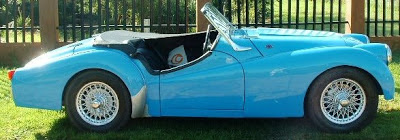

As modern cars become ever more amorphous and as image-conscious individuals wear their classics like designer suits, as a statement, the classic is no longer the preserve of bearded, middle-aged men. To own an old car has become trendy. For some, the word classic has become debased down the years, seeming to embrace any number of awful machines. To them, classics, derided by many in their prime, are now dignified merely by rarity.

The Growth of an Industry
Today the motor industry is essential to the commercial prosperity of almost all the world's industrialized nations, with production dominated by a handful of massive multi-nationals. Hundreds of individual marques have fallen by the wayside sine the first motor cars were hand-built at the turn of the century and the post-war classic period of mergers and take-overs saw the eclipse of many once famous names. It was in 1908 that this process began, when Henry Ford pioneered mass-production, with his Model-T, while over in Europe, a few years later, cars like the Austin Seven and Bullnose Morris began to be produced in sufficient numbers to bring motoring within the reach of the middle classes. Since the late 1970's, robots have replaced some of the manual jobs on the production lines, but there will always be a place for hand-crafted super cars and luxury cars from companies such as Aston Martin and Rolls Royce.

 Mercedes W154 "Silver Arrow GP racer

MOTOR RACING in all forms has been a consuming passion of each successive generation of car enthusiasts since the first organised competition. The pioneers, by pitching car against car and driver against driver, learned not only about their own skills and how well their vehicles performed at the limit, but also about the durability of components. In those days, racing really did improve the breed. In the years after the Second World War, technological discoveries made in competition, including better tyres, oil and fuel, filtered down gradually o the ordinary family saloon.


 Here's to another good motoring season!

"Patience is the ability to idle your motor when you feel like stripping your gears." 
 - Barbara Johnson, best selling writer
.
Read more

Sunday, 23 December 2012

Video: Porsche 911 Carrera 4S


IT’S two days before Christmas and with it being cold, wet and slippery out there the conditions aren’t exactly ideal for the sort of driving petrolheads enjoy. Or are they?

For decades keen drivers have known that a fast car is more likely to cope with wet, slippery conditions if the power’s going to all four wheels – so the power’s distributed more evenly, more of the time – and for more than 20 years one of the fastest  four wheel drivers on the market’s been the Carrera 4 version of Porsche’s evergreen 911.

If you’re the sort of person who likes their sports car to come with a little added reassurance when the going gets slippy then you’ll probably like this latest video from Porsche, which helps you get a grip – pun intended – on the history of the Carrera 4 system and how it’s evolved from the Paris Dakar Rally-winning 959 supercar to the latest 991 Carrera 4S.

Now all I need is to get the right Euromillions numbers. Fingers crossed...

 
Read more

Monday, 17 December 2012

Fantastic car, awful weather


IT’S not often I get an entire afternoon to reacquaint myself with an old car. Even when the afternoon’s as wet and unwelcoming as this one’s been.

The old car in question is one you’ll be familiar with if you read these pages regularly; my 1972 MGB GT , which despite being one of my most treasured possessions hasn’t done any meaningful driving since its appearance at the Ormskirk MotorFest back in August. With the weather turning increasingly cold and miserable, the tougher driving tasks have been assigned to the MX-5.

Until now.

I would’ve loved to point the MG’s nose onto the motorway and go hunting for the hills of the Lakes or North Wales but with just a few hours of meaningful daylight I play with I went to a place surprisingly few motorists outside the Sefton/West Lancashire area know about. The shots you see here are taken on Cleaves Hill, which is a stone’s throw from Aughton. Normally, it affords some great views across to Liverpool and even to the Welsh coast, but today just about the most it could do were these moody countryside shots of the MG.

The weather was cold and miserable, the amount of water involved was playing havoc with the GT’s indicator relay and the light was fading fast, but I absolutely loved my afternoon with it. It’s a proper sports car in the old fashioned sense; heavy, noisy and not especially easy to drive, but tinged with a romance and a nostalgia which make its sound, handling and style ever more enjoyable.

I just can’t wait for it to be summer again, so I can enjoy it properly.

Read more

Wednesday, 7 November 2012

Video: Morgan factory

SUPPOSE you were in the lucky position to have Morgan's mad Threewheeler on order.

That's the position a friend of Life On Cars is in, and on a trip to see how his Threewheeler was taking shape he recorded this video of life at the company's Malvern factory.

It gives a fascinating insight not only into how the Threewheeler - one of the best cars I've driven all year - takes shape, but also into how its more conventional four-wheeled siblings are crafted and at why Morgan is still quite unlike any other car maker in the country. Having also toured the old TVR factory in Blackpool before it closed and the Lotus plant in Norfolk earlier this year, it almost tempts me to take a trip down to Worcestershire and see it for myself.

If you're a fan of the Threewheeler but can't afford the £30,000 pricetag then you'll probably like this one...

Read more

Tuesday, 6 November 2012

Renault and Caterham join forces to build sports cars


THE problem with Renault's Wind was that it wasn't hardcore enough.

It was my kinda car; small, light, blessed with a clever roof which didn't ruin the shape, and underpinned with the same basic mechanicals you'll find in the Renaultsport Twingo 133. Yet the little roadster always lacked the bite of its hatchback sister, which I suspect is part of the reason why Renault quietly dropped the wind from its range last year.

Luckily, Renault's found an innovative solution to making its sports cars a touch more manic. It's brought its F1 partnership with Caterham onto the road, so the French automotive giant will join forces with the plucky Brit firm to design and build cars together, with the inevitable results getting the famed Alpine badge.

Renault chief Carlos Tavares said yesterday as the tie-up was announced: "Our ambitions of reviving Alpine depended on our ability to find a partner in order to ensure the economic profitability of such an adventure. Right from the start, we wanted to place the Dieppe plant at the heart of the project.

"Today, through our partnership with Caterham Group, we can enter a new phase:  the design of a vehicle that will embody the very essence of Alpine, a vehicle that will rekindle sporting passion once more. It could become a reality within the next three or four years."

It's the second sports car tie-up announced in the space of a year, after Fiat and Mazda teamed up to build an Alfa Spider with MX-5 mechanicals. However, if Renault matches the pedigree of its last proper sports car - the spectacular, race-bred Spyder - with Caterham's best known offering - the bonkers Seven R500 - then the Anglo-French efforts look set to interest the more hardcore end of the market.

Either way, it's encouraging to see that even in these tricky times, car makers still want to give us something to get excited about.


Read more

Friday, 5 October 2012

Is stretching an E-Type altering an icon?

A CLASSIC car specialist in Shropshire is about to do what some enthusiasts would call the unthinkable by stretching a Jaguar E-Type.

Classic Motor Cars Limited, based in Bridgnorth, said it is about to start work on a project which effectively involves making a 1968 4.2 litre Series 1 Roadster, but while it involves altering one of the best known sports car shapes of all time the company say they are keen to keep the preserve the E-Type's essence while making it roomier and easier to live with.

Nick Goldthorp, the company's managing director, said: "This is something that we have never been done before. Our client wanted the interior leg room of a Series 3 V12 E-Type but the aesthetics of a Series 1 car.

"We are going to add four and a half inches to the floor pan, which will give the leg room of the V12 plus an additional one inch if required. The V12 was actually nine inches longer than a Series I but a lot of the additional room was behind the seats as storage and is not required on our project. By adding four and a half inches to the length of the car we will be able to retain the overall look of the Series 1 and also turn this E-Type into a unique car."

The project involves not only stretching the left-hand-drive car by four and a half inches, but also fitting the Sixties sports car with modern technology, including air conditioning, power steering, upgraded brakes, a new five speed gearbox, better suspension and handling upgrades among other additions.

Paul Branstad, the American client who owns the car, said: "The stretched E-Type I have conceived sits between the Series 1 and the subsequent vehicles produced after the merger and formation of British Leyland, when the design of the cars underwent several transformations as a consequence of cuts in production costs and the need for more space that resulted in the Series II 2+2 and Series III V12."

While classic car purists would argue against altering aerodynamicist Malcolm Sayer's original vision for the E-Type's shape, the sketch included here, Life On Cars reckons, is sympathetic to the Jag's original styling, and could actually provide the tempting prospect of the earlier E-Types's looks with the creature comforts of the later V12 cars.

The stretched E-Type is expected to be completed in September next year.
Read more