Showing posts with label mini. Show all posts

Wednesday, 29 April 2015

Adding A Collectible Car To Your Portfolio For Fun And Profit


Well-heeled enthusiasts are dropping some serious money on collectible cars these days, not only as investments but as rolling works of art that can be appreciated as few appreciable assets can – out on the open road.

Collectible cars have always been a great investment and there are a lot of people out there who love cars and feel more comfortable putting their money in auto-mobiles than leaving it stagnate in a bank account.

Although there’s no crystal ball that lets an investor determine the future value of a collectible car, here are a few helpful tips for those looking to add one or more vintage rides to their portfolios as well as a wish list of 10 up-and-coming classic models that can be expected to grow in value over the coming years.

- Choose a particular model more for its personal and emotional appeal than strictly as an avenue for profit. Choose what you like, something you’ll enjoy driving and owning, and if there’s a dividend down the road – congratulations.

- But a word of caution - some cars may have great visual appeal that may not translate into value or reliability. In other words, do your homework and use the Internet and other resources to determine which models are most-desired by other collectors and to help estimate current values.

- Inspect the car thoroughly for rust, accident damage or any other faults

- As is the prudent course of action when buying any used vehicle, buy vintage cars only from reputable sources and have an expert mechanic check out a model under consideration to ensure it’s in good shape. Make sure the technician you choose is well versed in the peculiarities of the particular genre of vehicle in which you’re interested. If you’re buying a British sports car, you need to find a mechanic that understands British cars.

- Choose the best model in the best condition within a given class you can afford.

- Keep an eye out for originality – the fewer numbers of a particular model built or the rarity of a particular option combination included, the greater its value.

Even when stored properly, a car deteriorate when it’s not driven – by ‘exercising’ the car it stays in shape,. One of the best things you can do for a collectible car is to drive it. There’s no other investment that allows that kind of enjoyment!

TOP 10 (Starting at No. 10)
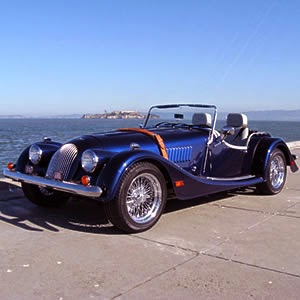

10. Morgan Plus 8. Built from 1968-2004
Take an unmistakably British roadster design, refrain from all but the most necessary updates to comply with regulations, build -- partially from wood -- in low numbers and, finally, become an icon. Now repeat. This was basically Morgan’s playbook for decades, and the team’s star forward was unquestionably the Plus 8. Built from 1968-2004 with few visual changes, this Moggie looked like ye olde sporting motorcar, but handled quite well and could keep up with many contemporary sports cars. Even today, there’s something quirky and fun about squeezing into one of these all-time British cars for a drive, especially the propane-fueled '84-'89 cars whose Buick-designed, Rover-sourced 3.5-liter V8 had fuel injection and a certain agility dulled by the bigger engines that soon followed.


9. Austin-Healey Sprite. 1958-1961
Donald Healey’s ultimate statement of affordable fun turns 50 this year, and even though the Austin-Healey Sprite’s demise came in 1969 (the less charismatic MG Midget cousin soldiered on another decade), it’s still one of the most popular all-time British cars for the street or, when modified, the track. Healey’s cost-saving approach depended on unabashed raiding of Austin and BMC parts bins, but the early Mk I Sprites of 1958-1961 featured an unmistakable front-end treatment: The Brits nicknamed these cars Frogeyes, whereas we nicknamed them Bugeyes. Regardless, these are the Sprites to own -- the ones wearing smiles, as big as their owners’.


8. Lotus Elise. First produced for Europe in 1996
Lotus founder Colin Chapman may have left us too soon, but his influence lives on with one of the all-time British cars worthy of being called a Lotus: the Elise. Chapman put Lotus on the map through obsessively cutting all unnecessary weight in his cars and tuning them for performance and handling. First produced for Europe in 1996, and finally appearing in the U.S. as a 2005 Series 2 model, some consider the Lotus Elise to be the car that saved the company’s bacon. Its success marked the long-overdue return of a genuine, reasonably affordable British sports car.


7. Landrover Series I, II and III. Between 1948 and 1985
Let’s make it perfectly clear: This is not about the squeaky-clean yuppie haulers that litter the suburbs. This is the British equivalent to America’s Jeep -- and to some Americans, the more desirable choice. Between 1948 and 1985, Series I, II and III Rovers were rugged and sparse, often matching the terrain they crossed. Like the Jeep, there was no pretense in the Rover’s presence, just incredible off-road ability. So as you might guess, this makes for a less than placid ride and handling on pavement. For the most agreeable compromise, shop for later Series IIIs from '82-'85 with their stronger half shafts and availability of limited creature comforts.
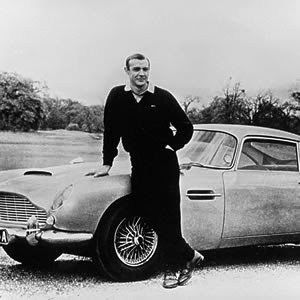

6. Aston Martin DB5. 1963
True, this is the model famous for its appearances as James Bond’s personal car, but even without all the 007 gadgets, an Aston Martin DB5 is quite a performer. Its 4.0-liter I-6 was smooth and powerful, offering up 282 horsepower and 8.1-second 0-60 mph acceleration on the way to a 143-mph top speed. This wasn’t half bad for 1963, and even now, a well-sorted DB5 doesn’t completely feel its age from behind the wheel. Production gave way to the DB6 in 1965, and the model’s celebrity association doesn’t make finding or affording one any easier. That’s not to say this all-time British car isn’t totally worth the effort.


5. Bentley Continental GT.
It was a tough call whether to recognize the impact of the 1920s 4.5-liter Blower Bentley or to celebrate the contemporary Continental GT coupe. In the end, the GT -- even if derided by some as a “German Bentley” due to the marque’s VW ownership -- takes the honor. Short of supercars at twice the price, there just aren’t many modern cars that make the statement of the Continental GT. Luxury and performance credentials are implied at a glance and immediately substantiated by the driving experience. Triple-digit speeds are attainable in a flash, but the whole affair is drama-free from inside the well-appointed cabin. Truly, that qualifies this all-time British car as a Bentley.
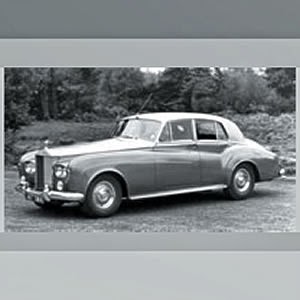

4. Rolls Royce Silver Cloud II. From 1959-1962
Today’s Phantom sedans and convertibles are impressive, but only time will tell whether their legends compare to the Silver Cloud’s. From 1959-1962, this car was the modern link to the marque’s earliest models that amazed buyers with durability, refinement and quiet, fuss-free operation. The Silver Cloud II featured understated improvements in cabin and exterior design elements that would live on in later cars for decades. Speaking of long-lived traits, the introduction of the Silver Cloud II also marked the debut of the 6.2-liter V8 and this all-time British car's “adequate” horsepower.
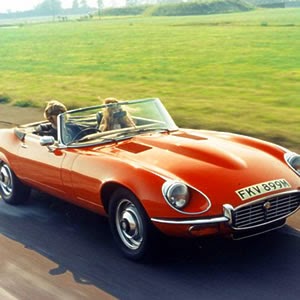

3. Jaguar E-type.
Earlier E-Type models from '61-'64 are seen as more desirable due to the covered headlamps and the entertaining 3.8-liter I-6 engine. For many enthusiasts, this is not a British car, this is the British car. Even Enzo Ferrari remarked that it was the most beautiful car ever made, upon its 1961 release. He wasn’t alone in this sentiment, as the immediately popular E-Type not only looked stylish enough to play with a Ferrari, it had the power to run with them. Jaguar press materials claimed 150 mph was possible, and if this was a little optimistic, it wasn’t off by much. Owners today probably aren’t as keen to explore their all-time British cars' upper limits, given the strong market and consistent demand. Earlier E-Type models from '61-'64 are seen as more desirable due to the covered headlamps and the entertaining 3.8-liter I-6 engine.
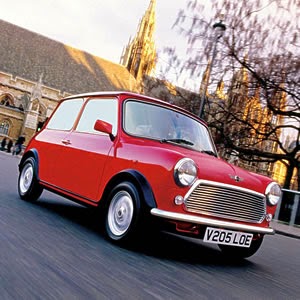

2. Austin Mini. 1959 to 1967
New MINI Coopers are typically dwarfed by just about anything on four wheels -- except maybe for the legend it’s based upon. And while the new car at least deserves an honorable mention in a review of all-time British cars, the original 1959 car made it all possible, even if it was somewhat by accident. Sir Alec Issigonis was only acting on orders to design a fuel-efficient car, not trying to create a legend -- but it turned out that both happened in the process. Thrift-minded consumers and celebrities alike celebrated the Mini, and it also made a name for itself in the racing world. Sales in the U.S. never matched those overseas, and tightening federal regulations didn’t help; so finding a decent '60-'67 model wasn't exactly easy.
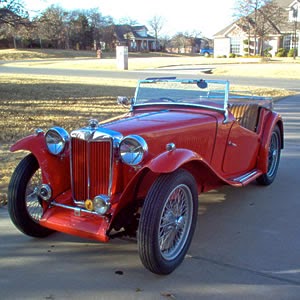

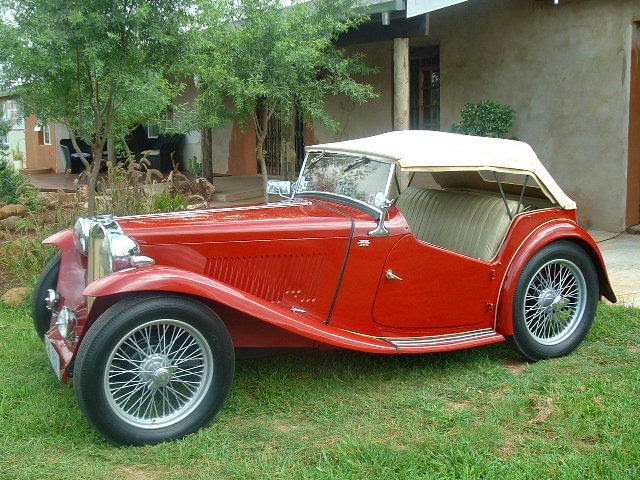
1. MG TC. 1945-1950 
You have to wonder what the state of sports cars would be today without the 1945-1950 MG TC. On its own, frankly, it was nothing spectacular. However, MGs were nothing like the typical cars across the pond, so they became a hit with American GIs abroad. Some brought the little TCs home after World War II, while others quickly bought them as dealers sprang up. Regardless, the acceptance of the unconventional car within such a car-centric culture is likely to be a major factor in what followed here and around the world.

.
Read more

Sunday, 20 April 2014

Classic cars - Technical development

In the beginning, cars were motorized horse carriages or, in the case of the three-wheeled Benz of 1889, relied heavily on cycle technology. Most cars were braked only by the rear wheel; steering, often by tiller, was slow and ponderous. a shoulder-high centre of gravity threatened to top the car over. All this was containable at the 4mp (6.4kph) first allowed in Britain for motor vehicles and not too scary at the 14mph (22.5kph) allowed by 1896, but as speeds rose, something had to be done. Makers who introduced each refinement created classics along the way.

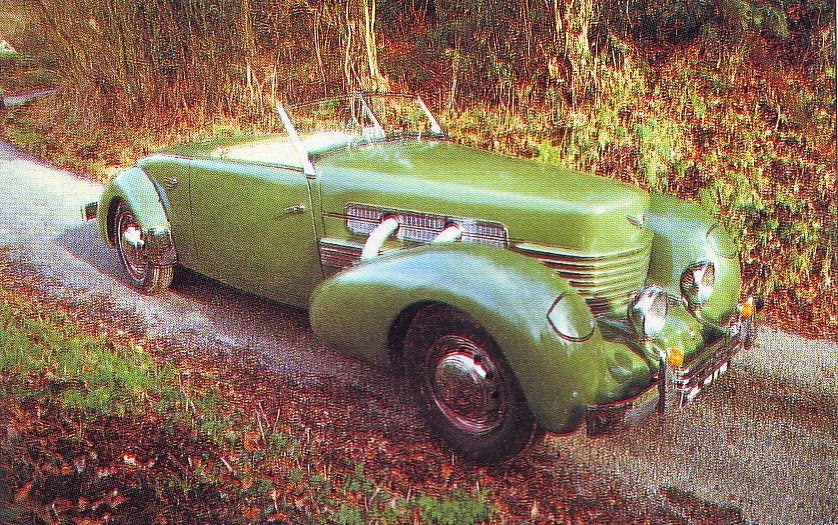
ABOVE : Cord's 810 used a super-charged V8 Lycoming engine with revolutionary front-wheel drive. 

TECHNOLOGY FILTERS DOWN
Excellence began with high-class cars such as the Rolls-Royce and Bentley. Steadily, the technology filtered down to such humble transport as the Austin Seven. By the start of the Second World War, bodies were generally made of steel, sat on a separate chassis, and there were brakes all round. Jaguar brought disc brakes to the world's notice at Le Mans in 1953; five years later they appeared on Jaguar's road cars and soon every maker used them.

REFINEMENT FOLLOWS
Four-wheel drive, with anti-lock brakes, was pioneered by Ferguson Formula. It first appeared in a passenger car on the Jensen FF of 1966, along with Dunlop Maxaret anti-lock brakes derived from aircraft technology. It was expensive and complex - only 320 were built.

ABOVE : The Lancia Aprillia was a ground-breaking saloon of the mid-1930's. 

Overhead camshafts allowed more direct operation of valves and a better combustion-chamber shape. They were used on specialist racing cars such as the Alfa Romeo and Bugatti from the 20's onwards and were introduced to the mainstream in the straight-six XK engine in the 120 of 1948. Soon, makers realised they could run double overhead camshafts and multi-valve layouts.

Self-leveling was a standard feature of the futuristic DS launched in 1955 by Citroën. Even the cheaper 2CV had a modicum of leveling, because front and rear suspension were inter-connected by springs. The British Motor Corporation (BMC) 1100 and 1800 of the 60's - and Minis of the period - are inter-connected hydraulically. Self-leveling was used at the tail-end of the Range Rover from its launch in 1970.

ABOVE : The revolutionary Mini, a masterpiece of packaging. 

Front-wheel drive used by BSA, Cord and Citroën since the 30's, did not hit the mainstream until the Mini appeared in 1959. While scorned by purists, this layout makes for safe, predictable handling and better packaging - more interior room for a given size - than rear-driven counterparts.

All the while, chassis improvements and tyre technology shadowed each other: Citroën's Traction-avant was the first car to use radial tyres, the narrow and distinctively treaded Michelin X.

ABOVE : A 1956 Chevy: crude - but comfortable and well-equipped. 

AMERICA THINKS BIG
In America, spacious cars with powerful, six- and eight-cylinder engines were common, even before the war. Makers loaded cars with every device to take the work out of driving: automatic transmission, power steering, power brakes, air conditioning, self-dipping headlamps. Engines, generally under-stressed by large capacity, show-cased maintenance-free features such as hydraulic tappets (initially used for quietness).

- Extracted from 'The World Encyclopedia of Cars' by Martin Buckley and Chris Rees

.
Read more

Thursday, 22 November 2012

What will happen to the Mini that time forgot?

IT'S like Indiana Jones meets The Italian Job. This story is so intruiging, I thought it needed bringing out of the classic car forums and onto these pages.

It begins deep underground, in a network of tunnels beneath one of Britain's biggest car factories, the former British Leyland plant at Longbridge. For years, a rather battered old Mini has sat down there, lonely and unloved, gathering dust for decades. It's been stripped of almost all of its useful bits and the roof's been bent in like a banana, but this Clubman version, not a million miles from the Seventies Minis you see above, is quite unlike any other. The Mini which nobody wanted is the last ever Mini to leave the factory.

How did it end up down there? Well, the story goes that when this Mini was being made, it fell off the production line at the factory, and rather than repair it the Longbridge workers ran it around the factory for a few miles and took whatever bits were useful off it to use on other cars.

When it was no longer deemed useful it was bundled off into the tunnel, which had been built in the 1940s to protect the factory workers - who were busy making ammunition rather than cars for a change - from the Luftwaffe. The Clubman that never was stayed in the tunnel right through the bitterest days of British Leyland, right through Austin Rover's tenure, remained unloved when BMW took over the reins and even remained ignored when MG Rover finally went bust in 2005. It's only now that a Mini enthusiast has had the tenacity to fish it out, and it's caused a bit of a fuore in the process.

Should the crumpled old heap, which had its roof stoved in after an unfortunate encounter with a shipping container, stay in that tunnel for posterity's sake? Should it be moved to a museum somewhere? Or should the car's saviour restore the old girl back to her former glory, even though for all sorts of boring legal reasons it can't actually be used on the road?

For what it's worth, I reckon it should come out, but I can't see many museums wanting to take on an exhibit that can't even be moved on its own wheels.

It'd take many of thousands of pounds to mend it properly and keep it original, but if someone's up for the exhaustion and expense then they've got my backing. It'd be great to see one last Mini - the Mini that time forgot - rev up its little A-Series engine in anger.

It's too good to be left abandoned in a tunnel forever.
Read more

Friday, 19 October 2012

FEATURE: CALL ME BUGGY


An unplanned trip had brought me to this beauty during my study life in Selangor, which was nicely parked in front of the faculty. To be specific, it is 1967 BMC Moke Convertible. From my observation, this 50-year-old body shell was still great and no major rust can be found. A very ideal platform for weekend leisure; drive straight to nearby beach with your Rayban on, roll down the top and enjoy evening breeze.


To me, one word best describes this Sir Alec Issigonis’s creation; “Unique”. Long time ago, it was not the best selling vintage during its era compared to its smaller brother, the Mini Austin. Today, the exclusivity of Mini Moke is priceless.


Surprisingly, collectors and hardcores start to hunt this chassis down for restoration in the late 90’s. Some rich fella would not even think twice to purchase a mint condition one with a price tag of a new Perodua Myvi 1.5 Extreme, which is twice the price of fully-restored Mini Austin.


A very good friend from Pakistan, Mansoor looked happy with the Moke. Hope he was sufficiently ‘poisoned’ to get one classic ride once he back hometown.

Bye.

Read more

Thursday, 31 May 2012

EVENT: A GREAT WEEKEND IN PUTRAJAYA PART 1


In Federal Territory of Kuala Lumpur, the last weekend of May is about Millions of Youth Gathering, and most importantly for me, they organized a classic car show and invited Royal Selangor Club members to cheer up the moment with their precious rides. This time, lets approach things a little differently with more classics from west side, starting with this solid red MGB Roadster convertible.


But that doesn’t mean that every car was from western side. Some came from the land of JDM. Next to the MG was this striking yellow Civic CRX on stock OEM wheels.


Things became more serious with this super clean Mercedes Benz vintage, looking good on white wall.


Just around the corner, I was amazed with this unique Alfa Romeo…


...and more importantly, it is the original Alfetta GTV version. A very handful unit in Malaysia.


All types of the breed could be seen, including second-generation type cars like this Jaguar MKII.


And the event would not be a success without some Japanese classics…


...so one of Royal Selangor Club member brought his 510 Bluebird to impress JDM lovers.


One of my favorite vintage on that day, this Amazon 123GT was so attractive that I can’t resist falling in love with.


Hunting for hot babes anyone? This BMW 635C SI is a good weapon.


More French goodies on that day with this Peugeot 404. It may looked average from this view…


…but those pointing and sharp curves turned it into something.


If I am not mistaken, this was the car model that the Allahyarham P. Ramlee drove in ‘Madu Tiga’ movie, the Triumph Spitfire.


And this unknown vintage (apology for my ignorance) , but the design is pretty unique with the taillight at the same level to the wheel.


I don’t think this beauty needs a caption, and it is your lucky day to find a stock condition 280ZX…


...which it looks like just stepped out of dealership in 1980’s. You envy Fairlady enthusiasts?


Another pristine condition marque by Ford, meet this Escort MKI 4 door sedan.


With shiny and sparkling color, I just admired how they managed to keep their car up to this condition.


The icon of the world, and you are not living on earth if you do not know this bug.


Amazingly, this Beetle was restored with original Volkswagen parts. I believe the owner is a VW purist.


Undeniably yes, and it’s the matter of right foot…


The cutest little thing ever produced, this Mini looked business in brownish-purple color.


One of my findings from the event and looks like someone drove over this vintage Fiat 1100 from 1960’s. Another time machine? Ask the owner perhaps.

Along with much more from this amazing event in Part 2. Stay tuned.
Read more

Monday, 14 May 2012

SPOTTED: SWAN CITY HUNTING PART 2


'Poison' mode again, this is the predecessor of Part 1 and I am gonna start with this Corolla KE20 2 door sedan. A good alternative for KE25 (Mango) and undoubtedly, I started to fall in love with this model.


The chassis was still in a good shape with essential parts were still attached.  And importantly, it was covered by a canvas and parked on pavement. So this helped to slow down the rust formation.


A late model (kouki) peanut based on the tail light.


This was what I found hundred meters from the KE20, a candy blue 3 door hatchback Charade G11. Super rare!


It seems that the owner was a Charade hardcore, and he had the outlook improved with Charade Turbo kits. The outer shell was pretty rusted, but it looks salvageable.


Surprisingly, a Celeste was spotted at a junkyard with most of the parts had been dismantled. No hope to make it road legal, plus it is a rare model too.


More cars were sacrificed for parts and metals.


Sad but true, a first gen Honda Prelude was chopped, and a wagon Corolla KE36 as well.


This time, spotted a Mitsubishi Tredia, KE70 GL and Subaru Leone, and few other unrecognized models.


Looking for a sunroof? A hope for 323 hardcore, this Mazda BD was left unchopped and the parts were still there.


More and more sacrificed oldskools such as Starlet KP, KE70 DX, Charmant, second gen Accord, Corolla liftback and few others.


And I bet this is the most disappointing panorama, you can not resist feeling hollow upon seeing the 323 GLC, Mazda 808 4 door sedan, KE35 hardtop and second gen Civic, were the members of the junkyard paradise.


Is that you Mr. Bean? I believe the junkyard owner knows the sentimental value of this Mini, so he put it on top of the container; or intentionally waiting for a potential buyer. OK that's all for now and will 'poison you guys with more pictures sooner. Chow!

Read more